
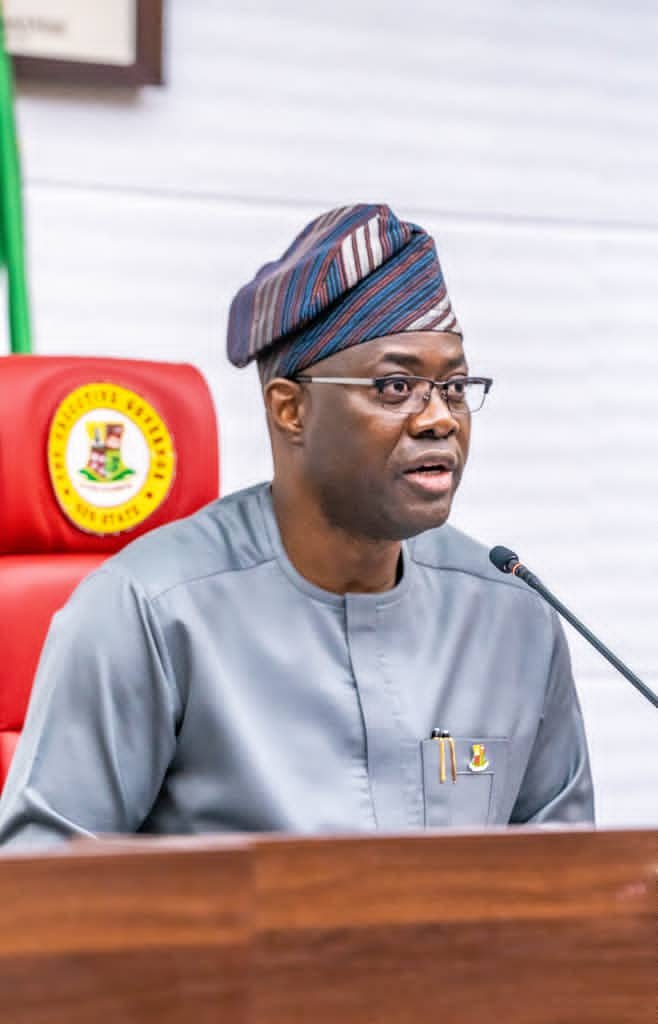


In a few weeks, the administration of Governor Seyi Makinde will mark seven years in office, leaving just one year to complete the two-term journey of Omituntun 1.0 and Omituntun 2.0. As the 2027 governorship race gradually takes shape, the people of Oyo State may ultimately face two major options — either sustain the Omituntun agenda through a successor backed by Governor Makinde or hand power to another political party entirely.

Virtually all the political parties recognised by INEC are already positioning themselves for the contest. Even parties with little grassroots strength are boasting of their readiness to end the Omituntun era. However, the final decision does not rest with politicians alone; it lies in the hands of the electorate, who will determine the future direction of the state.
Since 1999, Oyo State politics has largely revolved around a pattern of alternating power between progressive and conservative tendencies. The late former governor, Abiola Ajimobi, broke that pattern in 2015 when he secured a second term in office — the first governor in the state to achieve such a feat. Yet, despite the achievements recorded under his administration, his preferred successor was rejected in 2019, while Ajimobi himself lost the Oyo South Senatorial election.
Many observers believe the rejection was not necessarily because his administration failed to perform, but because many voters no longer desired continuity of the Ajumose agenda. Factors such as his style of governance, unresolved crises among political interest groups, and controversies surrounding candidate emergence contributed significantly to the outcome.
A similar political situation appears to be emerging within the Omituntun camp. However, Governor Makinde’s political dexterity and ability to manage internal disagreements may yet save the situation and pave the way for what supporters now describe as Omituntun 3.0.
The emergence of Mr. Bimbo Adekambi, a technocrat with a calm disposition and impressive professional background, has surprised many political observers. Adekambi, who served as a commissioner during Ajimobi’s administration, later aligned with Makinde’s government toward the end of the governor’s first term. Political insiders claim that if the G5 political permutations had fully materialised, Adekambi might have emerged as a ministerial nominee from Oyo State, as he reportedly enjoyed Governor Makinde’s strong backing before external political forces blocked the move — an incident many believe marked the beginning of certain political disagreements within the camp.
Governor Makinde’s remarkable achievements in office have further strengthened his popularity among many residents of the state. Despite repeated criticisms and allegations from the opposition — including controversies surrounding the alleged N30 billion Ibadan explosion intervention funds and speculations about plans affecting the Olubadan institution — a significant number of residents still appreciate his administration.
Regular payment of workers’ salaries and pensions, improved cash flow in the state economy, extensive road infrastructure, and several legacy projects have positioned Oyo State far ahead of where it once stood.
However, the crisis within the Peoples Democratic Party (PDP), which reportedly forced the governor to adopt the Allied Peoples Movement (APM) as a political platform for many loyalists, may create fresh challenges ahead of the election. The method used in selecting candidates for elective positions is already generating resentment in some local governments, especially in areas where sitting members of the State House of Assembly were returned.
Many grassroots party members believe some candidates were imposed and do not deserve another opportunity. If not carefully managed, this dissatisfaction could lead to internal sabotage and weaken the chances of Omituntun 3.0.
For Bimbo Adekambi, relying solely on Governor Makinde’s influence and political structure may not be enough. He must intensify efforts to win genuine support across party lines, particularly among members of the APC and stakeholders within the APM. More importantly, he must convince both supporters and rivals that he possesses the competence, loyalty, and leadership qualities needed to sustain the achievements of the current administration.
On the other hand, the lingering crisis within the All Progressives Congress in Oyo State also poses a serious threat to the opposition’s chances. Unresolved internal divisions could ultimately consume the party and deny it another opportunity to reclaim power if not properly handled.
In the end, the 2027 governorship election in Oyo State may come down to two critical factors: the quality of candidates presented by the political parties and their ability to persuade the electorate. The people of the state will ultimately decide whether they want continuity of the Omituntun vision or a return to what many describe as “ground zero.”