
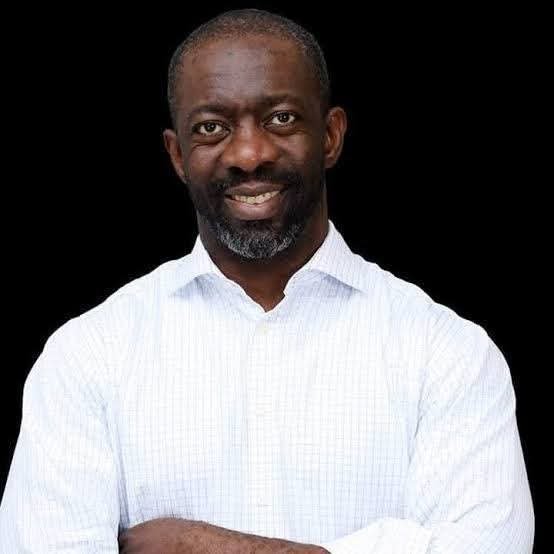
Since Tuesday, when speculations intensified over the possible choice of Governor Seyi Makinde’s preferred successor, political discussions across Oyo State have been dominated by mixed reactions, criticisms, and deep analysis of the governor’s political calculations ahead of the 2027 governorship race.


Many political observers and stakeholders expressed disappointment over the emergence of Bimbo Adekanmbi as the preferred candidate reportedly being positioned by Governor Makinde. To many within the Peoples Democratic Party (PDP), the choice appeared surprising because Adekanmbi is largely perceived as a technocrat rather than a grassroots politician with strong structures across the state.

Critics argue that considering the current internal crisis rocking the PDP and the growing possibility of Governor Makinde aligning with another political platform, the expectation was that the governor would settle for one of his long-time loyalists and political foot soldiers who have remained active within the system over the last seven years.
Names such as Dhikrullahi Olajide, popularly known as Odidiomo, and other aspirants were widely projected as likely favourites because of their visibility, political experience, and stronger acceptance among party faithful and grassroots mobilisers.
However, against the expectations of many political actors, Makinde reportedly settled for Adekanmbi, a former Commissioner for Finance under the administration of late former Governor Abiola Ajimobi.
Adekanmbi is not entirely new to the political and administrative landscape of Oyo State. Beyond his experience in public finance management, he also chaired the Airport Upgrade Committee inaugurated by Governor Makinde for the transformation of the Ladoke Akintola Airport project in Ibadan. His involvement in major developmental initiatives under both APC and PDP administrations has strengthened the perception of him as a bridge between technocratic governance and practical politics.
Political critics have described Makinde’s decision as an indirect indictment on his own political structure, arguing that the governor ought to have rewarded loyalty by choosing among his closest political allies who stood firmly with him since 2019.
Yet, another school of thought believes the governor’s move may be one of the smartest political calculations ahead of the next election cycle.
According to a top APC member and political analyst who spoke anonymously, Adekanmbi’s emergence could significantly destabilise the opposition camp, especially the All Progressives Congress (APC), which is already battling internal disagreements and accusations of imposition.
The source argued that Adekanmbi still commands influence and relationships within the APC because of his years in the party before aligning politically with Makinde.
“Bimbo Adekanmbi still has loyalists and political associates within the APC. Many people who are uncomfortable with the current situation in the APC may naturally shift support toward him. That is why Makinde’s calculation may eventually make sense politically,” the source stated.
Observers also point to Adekanmbi’s profile as a calm, intellectually driven administrator with deep experience in finance, investment, and governance. Unlike many conventional politicians, his appeal may lie more with the middle class, technocrats, civil servants, professionals, and voters seeking continuity in governance and infrastructure development.
Supporters of the move insist that Makinde may be prioritising competence, administrative continuity, and political strategy over populism. They argue that the governor possibly wants someone capable of sustaining his developmental agenda, particularly in infrastructure, agribusiness, education, and investment drive.
Nonetheless, political analysts believe one major challenge facing the project is marketing.
While Adekanmbi may possess the competence and elite acceptance required for governance, converting that into widespread grassroots popularity across Oyo State remains a major task. Unlike established grassroots politicians who have spent years building ward-level structures, Adekanmbi would need aggressive political mobilisation, strategic communication, and strong acceptance within any new political platform the governor may eventually adopt.
For Governor Makinde, therefore, the battle may not necessarily be about making the choice, but about convincing the people that the choice represents continuity, competence, stability, and a fresh political direction for Oyo State.
As permutations for 2027 continue to unfold, one thing appears certain: Makinde’s alleged endorsement of Bimbo Adekanmbi has already altered the political conversation in Oyo State and may yet reshape the balance of power across party lines.