
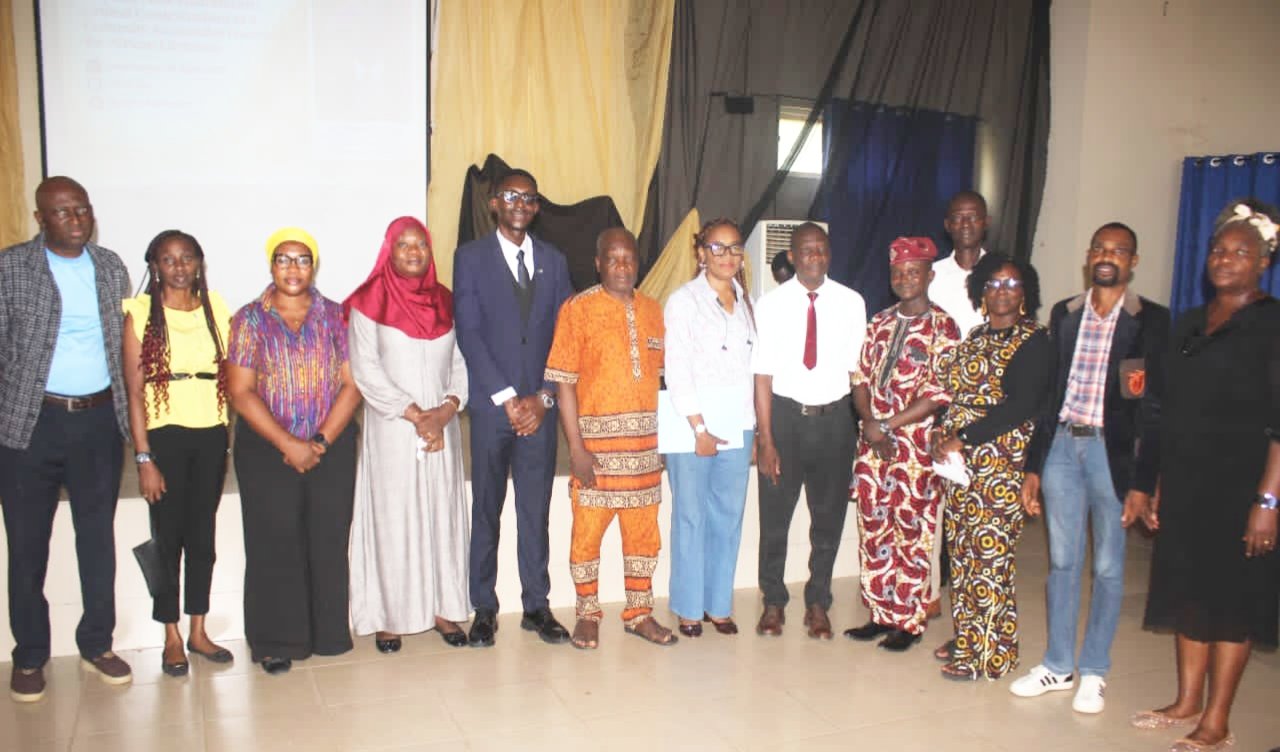
Academics and literary enthusiasts converged on KolaDaisi University (KDU), Ibadan, where scholars called for a fundamental shift in the evaluation of African literature, urging a move away from Western-dominated critical models.


The call was made during a faculty seminar at the institution, where Dr. Dowell I. Oba delivered a lecture titled “Beyond New Historicism: Critical Contextualism as a Culturally Accountable Framework for African Literature.”

In his presentation, Oba proposed an indigenous theoretical approach aimed at addressing what he described as the “blind spots” inherent in Western literary criticism.
The seminar was moderated by Dr. M. Ojelade and hosted by Prof. Sekinat Kola-Aderoju, Dean of the Faculty of Arts, Management, and Social Sciences.
Oba argued that African literature has historically been interpreted through Western theoretical frameworks that often misrepresent African realities. Drawing an analogy, he likened the practice to a French chef assessing Nigerian jollof rice using European culinary standards.
“They will complain there is no wine or French sauce and conclude the food is poorly made,” he said. “That is exactly what happens when Western literary frameworks are applied to African literature without accounting for our unique history, spirituality, and oral traditions.”
He particularly critiqued New Historicism, noting its reliance on written colonial archives while neglecting oral histories and indigenous spiritual worldviews. According to him, Western criticism often reduces African spiritual elements—such as ancestral forces and curses—to mere metaphors, rather than recognising them as integral aspects of lived experience.
As an alternative, Oba introduced “Critical Contextualism,” a four-stage analytical framework tailored to African texts. The approach includes Critical Mapping, which examines local histories and linguistic contexts; Formal Archaeology, which analyses narrative structures rooted in African storytelling traditions; Ideological Interrogation, which explores themes of power, gender, and resistance; and Circulation Analysis, which studies how texts move through global publishing and readership systems.
He noted that the framework has been applied to notable African literary works, including Americanah, Born on a Tuesday, We Need New Names, This Mournable Body, and Kintu.
In his closing remarks, Professor Jendele Hungbo, Professor of Journalism and Media Studies and former Dean of the faculty, commended the presentation, describing it as a significant contribution to the advancement of humanities scholarship in Nigeria and across Africa.