Fayose and the Paradox of a Broken Cistern.
Isiaka kehinde.


“O feshe lu, Aya kata
O feshe gban, Aya kata…
Basket mouth wan open mouth again oh…” — Fela Anikulapo Kuti.

When some people speak, the public listens with keen anticipation. This recalls the era of Fela Anikulapo Kuti at the Shrine, where crowds eagerly awaited what was famously known as “Yabis Night.” On such nights, Abami Eda would unleash lyrics that stung like bees against those in power—always worth the wait.
But times are changing, and we must evolve with them. Ironically, We now live in an age where some individuals thrive on spreading rumours—either to court attention or to satisfy their paymasters. Relishing unverified tales without scrutiny has become a troubling hallmark of a permissive society.
My late mother taught us a timeless lesson: never believe a claim without proof. In her words, “Ti mo ba ni omi n jo ile, e ni ki n bu eeru e wa”—if I claim that water burnt a house, ask me to bring its ashes. That is the distilled wisdom of the elders.
Today, however, many accept information hook, line, and sinker. This is why every claim should begin with doubt. In philosophy, this is known as Cartesian doub or methodological skepticism —a disciplined scepticism that demands evidence before belief.
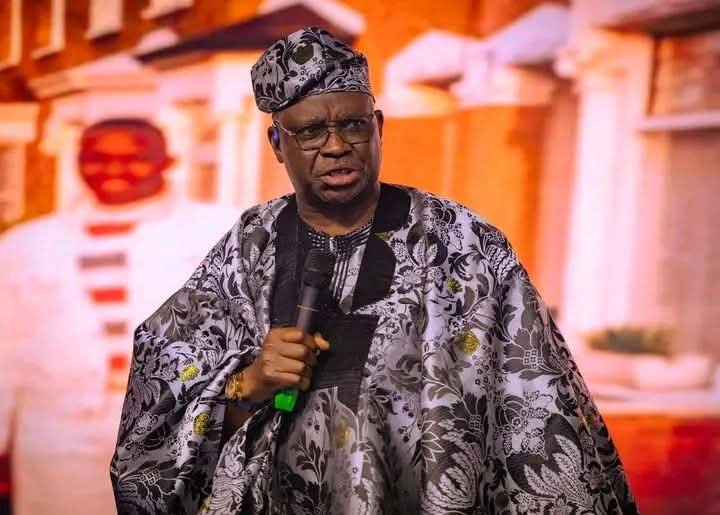
When statements are not subjected to scrutiny or empirical testing, falsehoods flourish. This is why an unrepentant figure like Ayodele Fayose can still command attention with exaggerated claims.
Recently, Fayose stirred the political space again, alleging that the governor of Oyo State intended to remove the Olubadan—a highly revered monarch. He doubled down at the palace, insisting that the throne of the Olubadan is divinely ordained and beyond temporal interference.
Fayose said, “I said what I said, although it is not for this gathering. The Olubadan has an eternal tenure with God. I was once a governor at sometimes. Your tenure was tied with the constitution of Nigeria, every other tenures like the Olubadan of Ibadanland is tied with God”.
Such unfalsifiable claims collapse under basic scrutiny. A simple question—cui bono? (who benefits?)—would expose their weakness. Why would a governor seek to dethrone a monarch whose installation he supported? Assertions without evidence only diminish our collective credibility before the global community.
To believe such claims uncritically is to surrender reason. Trusting hearsay is akin to embracing falsehood. As the Bible warns in Book of Jeremiah 2:13:
“My people have committed two evils: they have forsaken me, the spring of living water, and have hewn for themselves cisterns—broken cisterns that can hold no water.”
In the end, those who trade in unverified narratives resemble broken cisterns—unable to hold truth, leaking falsehood