
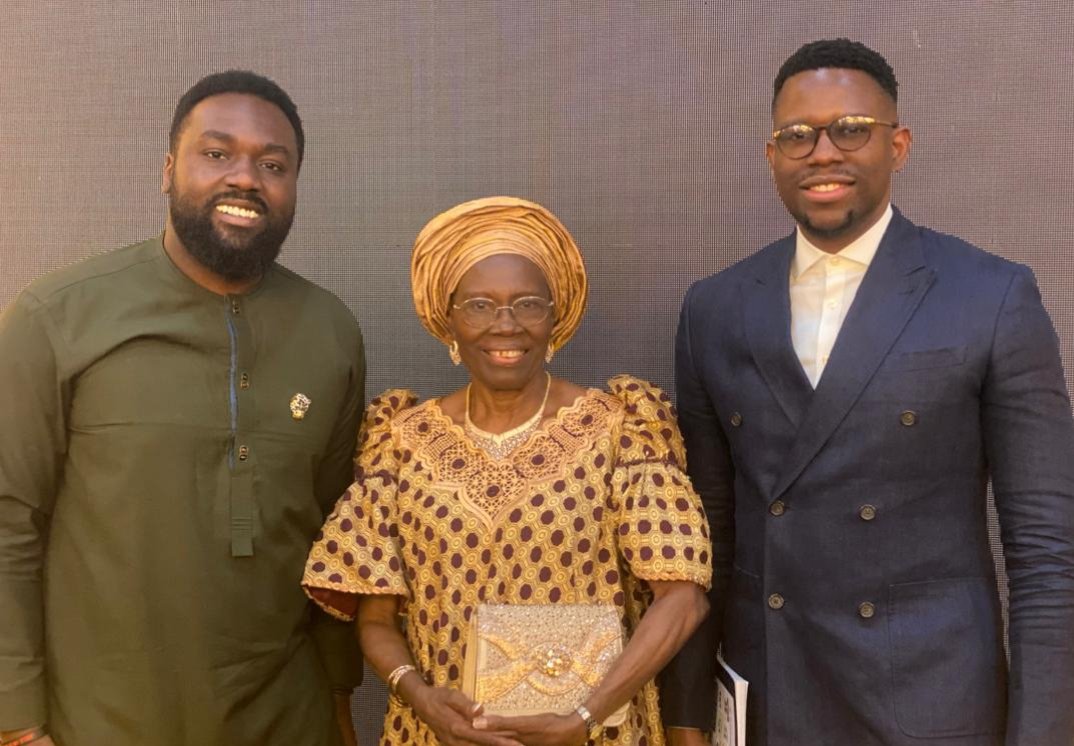
Renowned Nigerian haematologist and geneticist, Adeyinka Gladys Falusi, has been honoured with the prestigious Role Model Award by the Hallmarks of Labour Foundation (HLF) in recognition of her outstanding contributions to medical research and national development.


The award was presented on April 18, 2026, during the foundation’s 29th anniversary celebration held at Lagos Oriental Hotel. The event attracted a distinguished audience comprising academics, professionals, and industry leaders.

In a statement, HLF Executive Secretary, Patricia Otuedon-Arawore, said the award honours individuals whose professional achievements have made significant impact on national development. She described recipients as “Great Nigerian Role Models” whose lives inspire future generations.
Falusi’s recognition crowns decades of pioneering work in human genetics, particularly in research on sickle cell disease and alpha thalassaemia, which has contributed significantly to healthcare advancement in Nigeria and beyond.
Delivering her citation, Oladapo A. Ashiru, former President of the Academy of Medical Sciences of Nigeria and Chairman of the Medical ART Center, described Falusi as a trailblazer whose work has advanced healthcare delivery across Africa. He also highlighted her role in mentoring generations of healthcare professionals.
Also speaking, Anya O. Anya, former President of the Nigerian Academy of Science, lauded the honouree as an icon of excellence and a symbol of achievement for women in science.
Chairman of the occasion, Emeka Anyaoku, noted that the HLF award is highly coveted and reserved for individuals who have attained the pinnacle of their careers with exemplary character and integrity.
In her remarks, Professor Falusi expressed gratitude for the recognition, describing it as validation of years of dedication and sacrifice. She emphasised the need to build strong role models for Nigeria’s youth and called for greater inclusion of women in leadership across academia and research.
The event drew commendations from colleagues and associates, including Dr. Akinwumi Fajola, who praised Falusi’s continued advocacy for persons living with sickle cell disorder through her foundation.
Her husband, Abiodun Falusi, alongside their children and grandchildren, also expressed pride in her accomplishments, describing her as a symbol of resilience, excellence, and commitment to family.
With this honour, Falusi joins an elite list of past recipients, including Grace Alele-Williams, Theophilus Yakubu Danjuma, and Emeka Anyaoku, further cementing her legacy as one of Nigeria’s foremost scientific icons.