Ibadan will this week host Nigeria’s first-ever National Legislative Summit and Expo on Agricultural Colleges and Research Institutions, a major policy-driven initiative aimed at strengthening agricultural research, food security and job creation through collaboration and innovation.


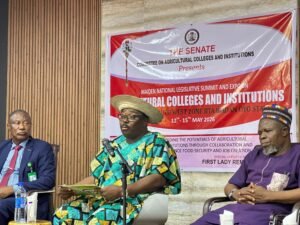
The four-day summit, scheduled for May 12 to 15 at the International Institute of Tropical Agriculture, is being facilitated by Sharafadeen Abiodun Alli, Chairman of the Senate Committee on Agricultural Colleges and Institutions.

With the theme, “Unfolding the Potentials of Agricultural Colleges and Institutions Through Collaboration and Innovation to Enhance Food Security and Job Creation,” the summit is expected to attract agricultural research institutes, colleges, policymakers, development partners, foreign embassies, private sector stakeholders and farmers from across Nigeria.
Nigeria’s First Lady, Oluremi Tinubu, is expected as the Special Guest of Honour at what organisers described as the first legislative-driven national engagement dedicated specifically to agricultural colleges and research institutions in the country.
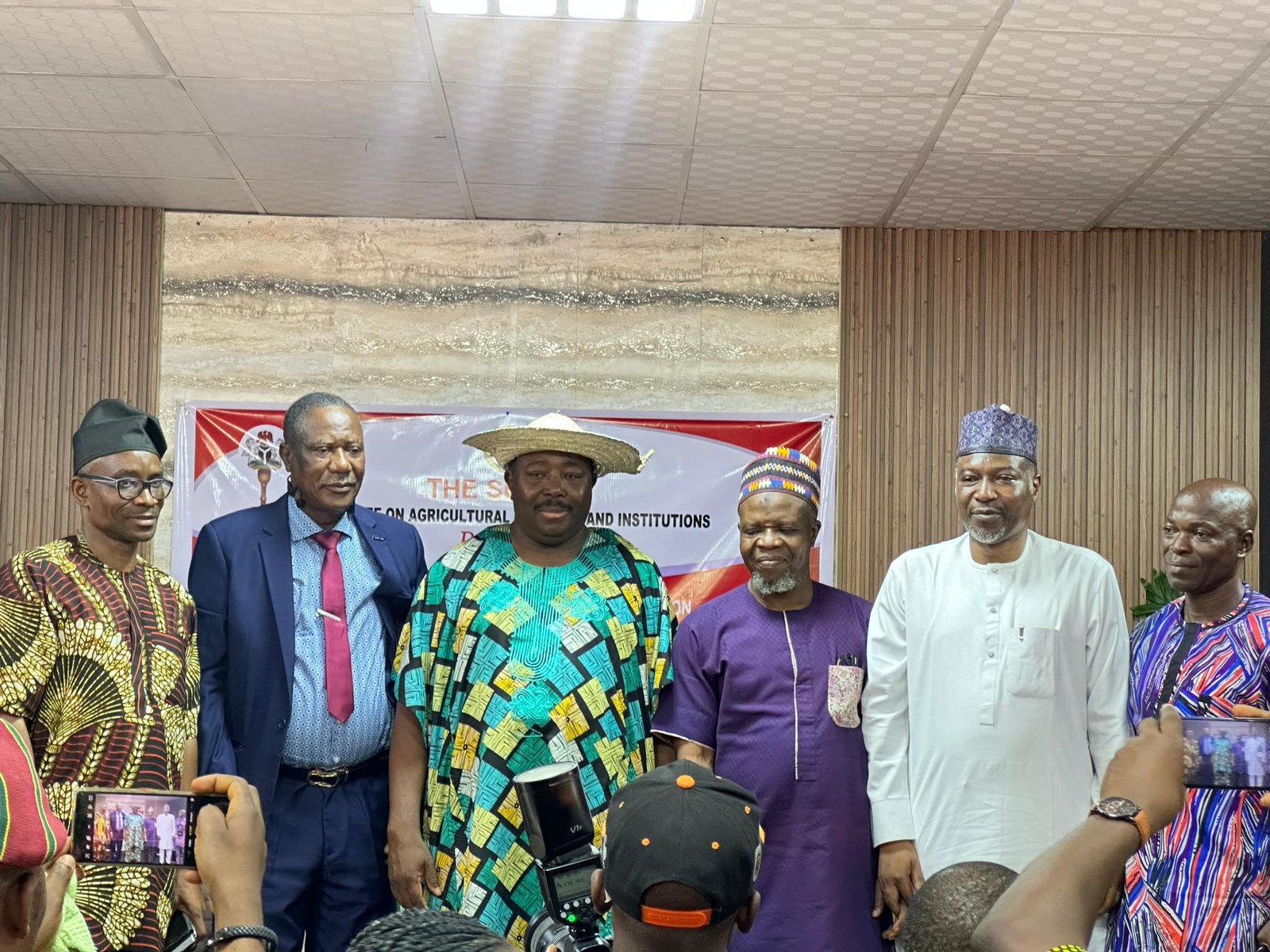
Speaking during a media parley organised by the Nigeria Union of Journalists ahead of the summit, Senator Alli said the initiative was conceived to bridge the long-standing gap between research institutions, government agencies and farmers.
According to the lawmaker, the summit followed deliberations held during the committee’s retreat in December with heads of agricultural institutions, agencies and development partners.
He explained that the gathering would focus on strengthening the legislative framework guiding agricultural colleges and research institutions, improving inter-agency collaboration and ensuring that research findings are translated into practical solutions for farmers and the economy.
Alli lamented that despite several breakthroughs by Nigerian agricultural research institutes, many local farmers remained unaware of improved technologies and innovations because of weak coordination and inadequate dissemination.
He cited improved cocoa seedlings capable of fruiting within 18 months, compared to the traditional seven-year cycle, as well as several improved cassava varieties developed through research institutions.
The senator stressed that research and innovation remained central to achieving sustainable food security, insisting that agricultural transformation could only succeed through strong legislation, institutional support and effective implementation.
Drawing comparisons with Malaysia’s oil palm industry, Alli recalled that oil palm seedlings were originally taken from Nigeria decades ago, yet Malaysia had become one of the world’s leading producers through sustained investment and coordinated implementation.
He attributed Nigeria’s agricultural challenges partly to poor policy implementation, weak funding for research institutions and inadequate collaboration among stakeholders.
The senator also identified post-harvest losses, poor storage facilities and unstable market systems as critical obstacles confronting farmers nationwide.
According to him, the committee had already initiated partnerships with development organisations to support farmers through mechanised land preparation, cultivation, harvesting and market access programmes targeted at youths and women.
He further disclosed that solar-powered dryers had been introduced in some farming communities to reduce post-harvest losses and improve food preservation and value addition.
Alli revealed that over 28 agricultural institutions, alongside about 12 embassies and international development organisations, including the European Union, GIZ, the British High Commission and the Embassy of Malaysia, would participate in the summit.
He added that agricultural desk officers from several embassies would explore opportunities for research collaboration, international partnerships and agricultural development support.
The senator urged journalists and media organisations to sustain conversations around agricultural research, food security and institutional funding in order to attract broader stakeholder support for the sector.
Earlier, Chairman of the Nigeria Union of Journalists, Akeem Abas, described the summit as a timely intervention capable of repositioning Nigeria’s agricultural institutions and strengthening food security.
Abas commended Senator Alli for what he termed visionary leadership and commitment to institutional reforms, noting that the summit could help restore Nigeria’s place as a leading agricultural force in Africa.
Also speaking, Executive Director of the National Horticultural Research Institute, Mohammed Lawal Atanda, described the summit as the first of its kind in Nigeria’s agricultural research sector.
Atanda said the initiative would strengthen legislative support for agricultural institutions while improving visibility, coordination and sustainable development.
He noted that Nigerian research institutes possessed highly skilled researchers and globally competitive innovations that required greater support and exposure.
Similarly, Acting Executive Director of the Cocoa Research Institute of Nigeria, Adedeji Abiodun Rasheed, called for stronger private sector participation in agricultural research funding and institutional revitalisation.
Rasheed maintained that government alone could not restore the lost glory of agricultural research institutions, urging stakeholders across the agricultural value chain to support ongoing reforms.
In his remarks, Executive Director of the Institute of Agricultural Research and Training, Oluwatosin Gabriel, emphasised the need to reposition agricultural research institutes and colleges through legislation, collaboration and executive backing.
Gabriel described Ibadan as a strategic host city because of its historic role in agricultural research and innovation since the old Western Region era.
He stressed the need for stronger synergy among federal and state governments, research institutions and the private sector to boost food production and national food security.
The summit is expected to feature policy dialogues, exhibitions, research presentations and strategic discussions focused on food security, mechanisation, research commercialisation, youth empowerment, international partnerships and sustainable agricultural development.