The Oyo State Government has dismissed allegations by the Muslim Rights Concern (MURIC) that Governor ‘Seyi Makinde is anti-Islam, insisting that the governor’s longstanding relationship with the Muslim community and support for Islamic activities contradict the claims.

The government said Makinde’s record of building mosques, employing Imams, supporting Islamic programmes and organisations, and recognising the Islamic New Year demonstrated his commitment to religious inclusion and tolerance.

The government’s position was contained in a statement issued on Thursday by the Special Adviser on Media to the Governor, Dr Sulaimon Olanrewaju, who argued that the governor’s actions before and during his administration provided sufficient evidence against the allegations.
According to Olanrewaju, Makinde built the Omituntun Mosque and employed a resident Imam long before becoming governor, while the Omituntun family had maintained relationships with the Muslim community through Ramadan lectures and other Islamic programmes.
He said the governor’s involvement with Muslims predated political office, state resources and any ambition for higher political positions.
“Why would a man allegedly driven by anti-Muslim prejudice invest his personal resources in building and maintaining a mosque years before becoming governor?” he asked.
The government also challenged MURIC to identify any Islamic practice Makinde had abolished, Muslim institution he had proscribed, Islamic celebration he had banned or Muslim right he had withdrawn since assuming office.
It maintained that the administration had, instead, formally recognised the Islamic calendar by declaring a work-free day to commemorate Hijrah, the Islamic New Year.
Olanrewaju further listed the governor’s support for Muslim organisations and Islamic institutions as evidence of his administration’s engagement with the Muslim community.
On allegations that Muslim students and teachers were allegedly compelled to participate in Christmas carols in schools and Christian crusades, the government described the claims as unsubstantiated.
It said no official directive, circular, executive instruction or government policy had been produced to establish that Makinde ordered or approved the alleged compulsory participation.
The statement also addressed the controversy surrounding the demolition of the Adogba Central Mosque during the reconstruction of the Iwo Road Interchange.
According to the government, Makinde personally visited the mosque before its demolition, worshipped alongside Muslims, explained the necessity of the infrastructure project and publicly promised to rebuild the affected religious structure.
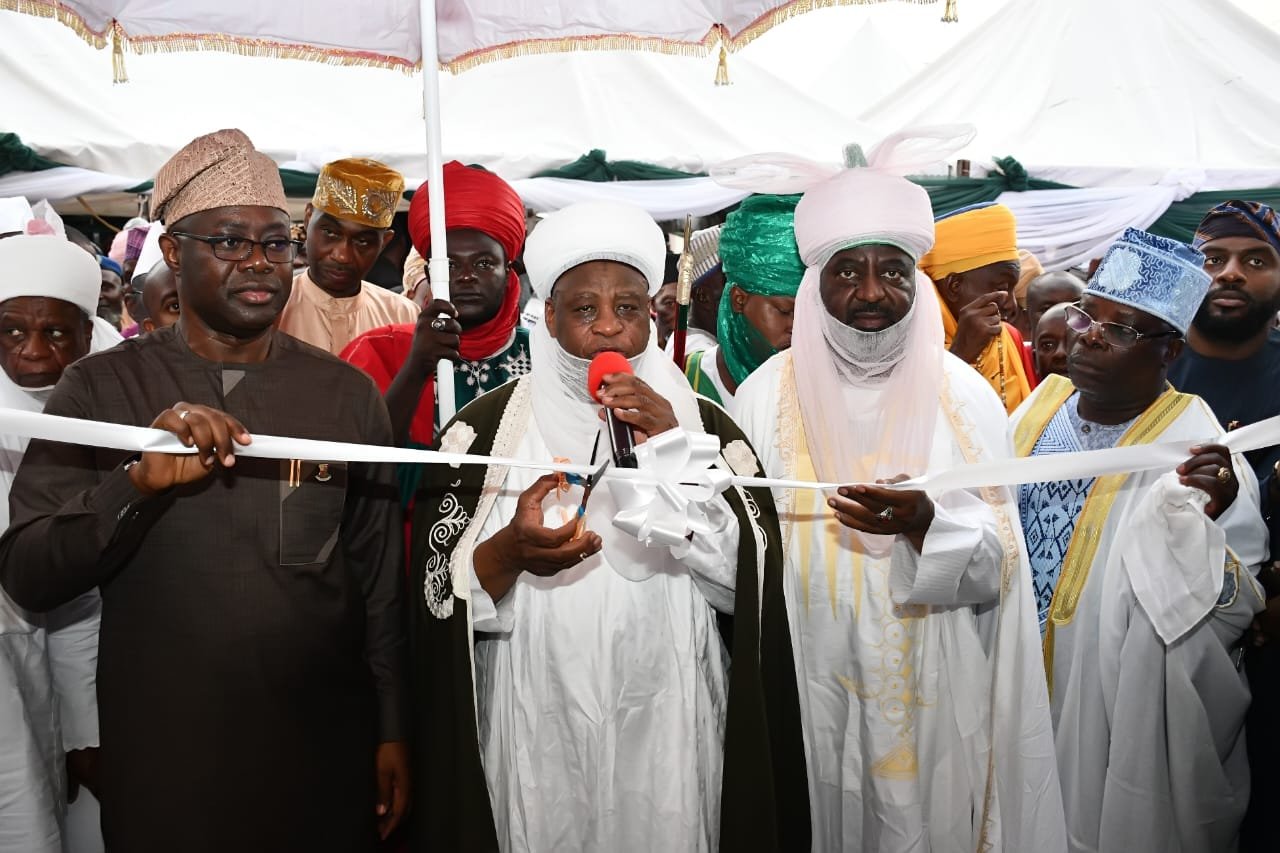
Olanrewaju said the governor fulfilled the promise by rebuilding and handing over the mosque, which he described as having several modern facilities.
He added that the commissioning ceremony was attended by prominent Muslim leaders, including the Sultan of Sokoto, whom he described as the spiritual leader of Nigerian Muslims.
The governor’s aide questioned why the Sultan would associate with the commissioning of a mosque if the intention was to alienate Muslims.
Reiterating the government’s position, Olanrewaju challenged MURIC to provide evidence of any policy or action by the governor specifically designed to suppress Islam.
He said the available record showed a pattern of engagement rather than hostility, and inclusion rather than exclusion.
The government further expressed confidence that Makinde, if elected President of Nigeria, would uphold the constitutional rights of citizens irrespective of their religious affiliations.
It said his administration would continue to promote an environment where Muslims, Christians and adherents of other faiths could practise their religions in peace, dignity and mutual respect.
The statement was signed by Dr Sulaimon Olanrewaju, Special Adviser (Media) to the Governor of Oyo State, and dated November 5, 2026.