

The Economic and Financial Crimes Commission (EFCC) has secured a final forfeiture order for 48 properties linked to a former Attorney-General of the Federation and Minister of Justice, Abubakar Malami (SAN), after the Federal High Court in Abuja ruled that the assets were reasonably suspected to have been acquired with proceeds of unlawful activities.


Justice Joyce Abdulmalik delivered the judgment on Wednesday, July 15, 2026, holding that the EFCC successfully established that the properties were not acquired from lawful sources of income.

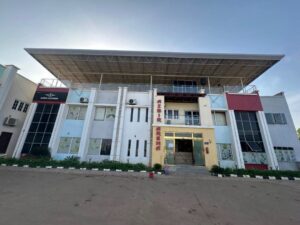
Among the assets forfeited to the Federal Government are Rayhaan University in Kebbi State, including its permanent, temporary and third campuses, the Vice Chancellor’s residence, and Rayhaan Radio located along the Sani Abacha Bypass in Birnin Kebbi.
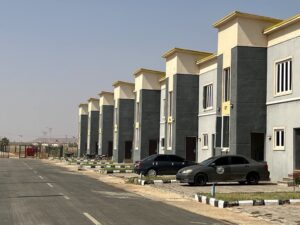
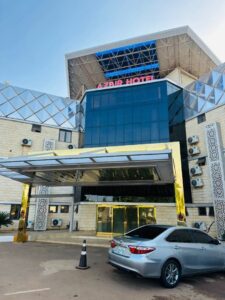
The forfeiture also covers several high-value properties across Abuja, Kano and Kebbi States, including luxury hotels, duplexes, commercial plazas, warehouses, residential estates and vast parcels of land.
Other assets affected by the order include Rayhaan Agro Allied Factory, Azbir Arena with its hotel, printing press, gardens, pharmacy and supermarket, Al-Afiya Energy tanker garage, Rayhaan Security House, an uncompleted commercial plaza in Birnin Kebbi, Amasdul Oil and Gas filling station structure, and Zeennoor Hotel in Kano with its 131-room facility and adjoining mosque.
Justice Abdulmalik ruled that the respondents, including Malami and 14 members of his family and associates, failed to discharge the evidential burden of proving that the properties were acquired with legitimate income.
According to the court, the respondents merely claimed ownership of the assets without providing credible evidence showing the lawful sources of the funds used to acquire them.
The judge further explained that in non-conviction-based forfeiture proceedings, ownership claims alone are insufficient, stressing that respondents are required to demonstrate that the assets were acquired through legitimate means.
The final forfeiture followed an interim order granted on January 6, 2026, by Justice Emeka Nwite after an ex parte application filed by EFCC counsel, Ekele Iheanacho (SAN).
In compliance with the court’s directive, the EFCC published the interim forfeiture order in national newspapers, inviting interested parties to show cause why the properties should not be permanently forfeited to the Federal Government.
Malami and 14 others subsequently challenged the interim order, questioned the court’s jurisdiction and urged it to reject the EFCC’s application for final forfeiture.
The matter was heard by Justice Abdulmalik on May 27, 2026, before judgment was reserved.
Delivering the final verdict, the court upheld the EFCC’s application and ordered the permanent forfeiture of all 48 properties to the Federal Government, concluding that the Commission had established that the assets were reasonably suspected to be proceeds of unlawful activities and that the respondents failed to provide satisfactory evidence of legitimate acquisition.