

 The age-long proverb, “One good turn deserves another,” it seems to me, is not resident in the dictionary of present-day South Africans. Or could it be that they are oblivious of the history of their country and the role that Nigeria and, indeed, other sister African countries played in solidarity against Apartheid in South Africa during that ignoble era in their history?

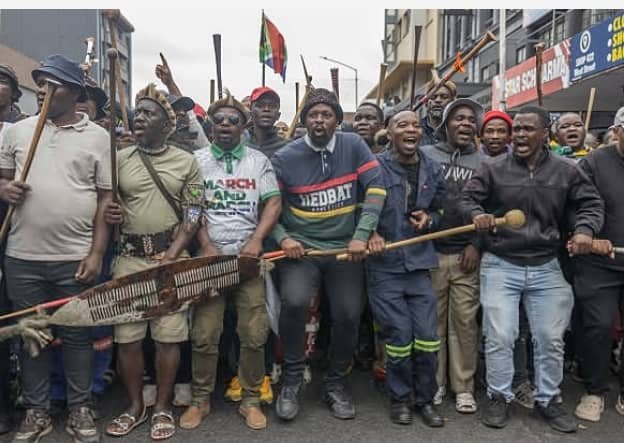
I have been robbed of sleep for a couple of days now, pondering the immigration crisis in the country and the forceful and vigilante-style eviction of other African nationals, mostly Nigerians, from the country. In all honesty, it has been deeply disappointing, to say the least. Prior to the present situation, anti-immigrant campaigns in South Africa have existed for over two decades, which, as claimed by the nationals, were driven by high unemployment, poverty, crime, and frustrations over lack of public services. Many South Africans believe that undocumented immigrants compete with them for jobs, housing, health care, and social services, thus making them unable to have access to all these basic necessities in their own land. Beliefs and claims that research has, however, proven to be lacking in empirical evidence and therefore baseless as the sole causative factor of the problems they are facing.
They tend to ignore the weak quality of education some of them possess, and the skills mismatch which makes them unsuitable for labour market demands for technically and digitally inclined jobs in this digital age. Though this is a problem in most countries in sub-Saharan Africa that have large numbers of graduates in the labour market who are unable to get jobs, partly as a result of their lack of valuable digital, technical, and even vocational skills required by employers today.
Aside from this factor, however, crime, insecurity, systemic corruption, and poor governance are critical factors that contribute largely to slow economic growth and unemployment in South Africa. The country has one of the highest youth unemployment rates in the world because the high level of violent crimes in the country discourages investment, which automatically reduces job creation.
Additionally, systemic corruption and government mismanagement of public resources have weakened service delivery, infrastructural development, and investor confidence, limiting economic opportunities. To cap it all up, the legacy of Apartheid in the country is a stark reality that is still very much in existence. Even decades after the end of Apartheid in South Africa, inequality in education, housing, infrastructure, and economic opportunity remains significant. Many black communities still face the long-term effect of this historical disadvantage.
In light of these, it is clearly evident that attributing the cause of their economic woes to the presence of illegal immigrants in their country alone is just a case of “giving a dog a bad name in order to hang it.” And looking at the xenophobic attacks that have been launched on Nigerians in South Africa over the years, coupled with the two individuals, Emeka Iroegbu and Musa Yunana Joe, recently killed on the 28th of June 2026 amid the anti-migrant tensions, I can’t help but wonder if it isn’t this same South Africa that Nigeria and, indeed, the rest of Africa fought vigorously against Apartheid for?
I remember vividly growing up in the 80s, listening to songs of “Free Mandela” and “Stop Apartheid in South Africa” by notable Nigerian artists like Majek Fashek, Onyeka Onwenu, and Sonny Okosun, to mention just a few. These songs played on repeat on NTA 2 Channel 5 and Channel 10 in Lagos those years that I initially thought Nelson Mandela was a Nigerian. Mandela was released in 1990 and became the first black President of South Africa in 1994, ending 84 years of racial segregation in the country, including 46 years of official Apartheid. Thirty-two years after, South Africans can no longer tolerate nor accommodate their comrade African brothers and sisters who stood with them in solidarity in their time of need.
So in reality, one good turn might not necessarily lead to another, and people actually do possess the will to repay good with evil. It’s just the way of the world. This is the reason why it is more expedient in life to live with fewer expectations from people and strive to be self-sufficient. A heart that expects nothing from anyone, even after giving all to everyone, is a heart that is less broken. This is on a micro level. On a macro level, however, the length and breadth of this story is that Nigeria actually needs to take care of its own people. Studies have revealed that 90% of the reason why people “Japa” is to seek better opportunities for survival that were seemingly unavailable in their home country; otherwise, they would have stayed back. This South African experience, and in fact what is going on in the United States at the moment, is a testament to the fact that countries change and their policies change with them. Therefore, there’s really no place as secure as your country of origin. Just a few days back, the U.S. Supreme Court struck out President Trump’s executive order abolishing birthright citizenship in the United States on the grounds that it violated the 14th Amendment to the U.S. Constitution. What this means is that if President Trump is able to lobby enough loyalists of like minds to achieve two-thirds votes and ratification in the federal Congress and 34 of the 50 state legislatures to amend the Constitution, then he might just achieve his aim. These might look far-fetched, but the fact that it even crossed his mind to change a policy that had existed since 1868 — a 158-year-old policy — calls for concern. And the only concern I see here is to make Nigeria good enough for everyone to want to remain in the country to contribute to its goodness.
Nigeria’s greatest resource is its people, and its long-term prosperity is built at home through honest leadership and responsible citizenship, achieved through the defence and respect for the rule of law. When government creates an enabling environment and citizens embrace hard work, innovation, and accountability, Nigeria can become a destination for investment rather than a source of economic migration. Building a better country for everyone will reduce the need to seek uncertain futures abroad and create opportunities for every citizen to pursue a dignified and prosperous life within our own country. This, I believe, is the only way to go.
Meanwhile, for the dozens just repatriated from South Africa, I hope the government finds a way to truly assist them to start all over again, particularly those that left investments and businesses worth millions behind in South Africa and returned to Nigeria with just medium-sized travelling bags.
Olusegun Hassan, Ph.D
Public Policy Analyst and Social Commentator