
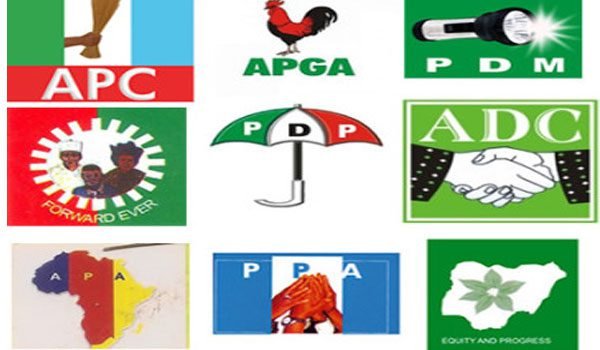
In Nigeria’s ever-volatile political landscape, party loyalty often seems to outweigh the pursuit of good governance. From the All Progressives Congress (APC) to the Peoples Democratic Party (PDP), Labour Party (LP), and African Democratic Congress (ADC), politicians and their supporters tend to treat politics as warfare — not as a marketplace of ideas.
The political scene is marked by deep-rooted rivalry, with partisanship sometimes taking on the form of religion. For many Nigerians, party allegiance has become a creed, and those who belong to “the other side” are viewed as enemies rather than fellow citizens with different political choices. Yet, beneath the noise and hostility, one truth remains clear: the average Nigerian does not care much about political colouration. Whether red, green, or blue, Nigerians yearn for leaders who will ensure security, create jobs, and deliver the dividends of democracy.

It has become common, even expected, to see fierce exchanges on social media or during public debates — not over policy direction or governance performance, but over which political party “owns the bragging rights.” Supporters often speak as though their party affiliation is an identity marker, and many refuse to acknowledge good policies if they come from an opposing camp. This trend is particularly disturbing because it distracts from the real issues that matter to citizens: food security, education, employment, healthcare, and the safety of lives and property.
Political analysts note that this blind loyalty is one of the reasons Nigeria struggles to hold leaders accountable. “Once a politician emerges from our party, we stop asking questions,” says Ibadan-based political commentator Akin Fadeyi. “We defend them even when they fail. That’s not democracy — that’s political idolatry.”
To be fair, there is nothing wrong with being proud of one’s political affiliation. In mature democracies, citizens openly identify with parties whose ideologies align with their beliefs. The problem, however, arises when party loyalty supersedes national interest. Party membership should be about values — transparency, inclusion, and development. It should not be an excuse for division or hatred. As the saying goes, “You campaign in poetry, but you govern in prose.”
The measure of a good political party should be the positive impact it has on citizens’ lives, not the noise it makes in defending its members or vilifying the opposition. Nigerians must begin to demand accountability and performance from leaders across board, irrespective of party affiliation. When roads are bad, it affects both PDP and APC supporters. When inflation rises, it does not discriminate between LP and ADC members. Insecurity does not ask for voter cards before striking.
The future of Nigeria depends on citizens rising above petty partisanship to focus on results. Our collective demand should be for a secure nation, quality education, accessible healthcare, reliable power supply, and a government that works for all.
At the end of the day, Nigerians belong to one true party — the Party of Good Governance. Political labels will fade, but the hunger for progress will not. What Nigerians truly want is a government that listens, acts, and delivers. Whether APC or PDP, LP or ADC, what truly matters is not the party in power, but the power of good governance in every party.