Introduction: A Vision for a New Nigeria. A case Study of Leadership and Economic Transformation under President Bola Tinubu’s Renewed Hope Agenda.


National development requires leaders who can recognise untapped opportunities and translate them into tangible benefits for citizens. In Nigeria’s quest for food security, economic diversification, employment and sustainable prosperity, livestock development stands out as a sector with enormous potential.
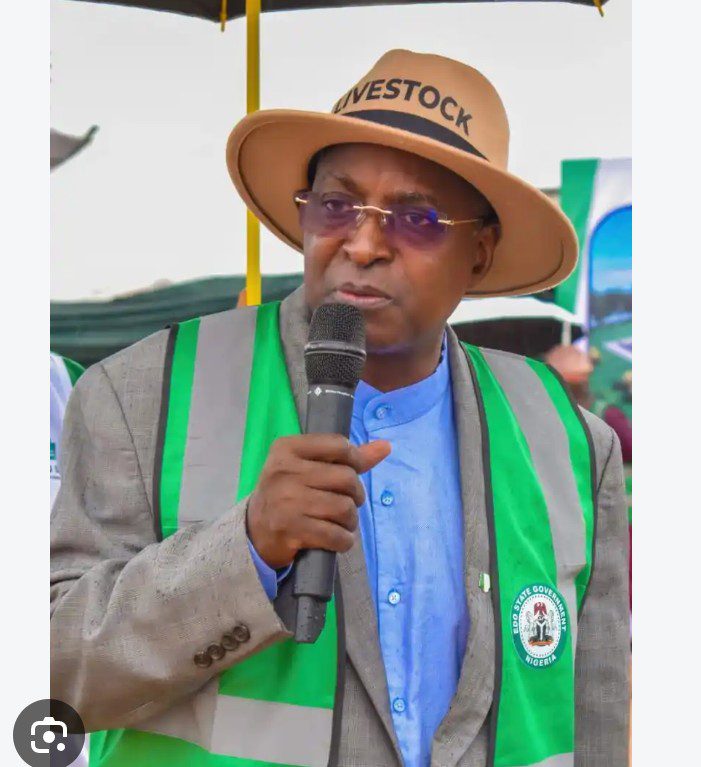
It is against this background that Alhaji Idi Mukhtar Maiha, Nigeria’s pioneer Minister of Livestock Development, has assumed a significant role in advancing President Bola Ahmed Tinubu’s Renewed Hope Agenda.
Established in July 2024, the Federal Ministry of Livestock Development represents a strategic commitment to reposition livestock as a driver of economic growth, food production, investment and rural prosperity.
Maiha’s responsibility extends beyond managing a ministry. It involves helping to transform a traditionally organised industry into a modern, productive and globally competitive economic sector.
His emergence as an Apostle of Renewed Hope Agenda reflects the ambition to turn national policy into practical opportunities for farmers, pastoralists, investors, entrepreneurs and millions of Nigerians whose livelihoods depend on agriculture.
A New Direction for Livestock Development.
One of the most important developments under Maiha’s stewardship is the effort to establish a coordinated national framework for livestock transformation.
For decades, the sector has faced challenges involving inadequate infrastructure, limited access to finance, animal diseases, high feed costs, low productivity and fragmented markets. These constraints have limited its contribution to Nigeria’s economic potential.
The creation of a dedicated ministry provides an institutional platform to address these challenges more systematically.
A major step in this direction was the development of the National Livestock Master Plan, in collaboration with the International Livestock Research Institute (ILRI). Presented in September 2025, the plan identifies cattle, poultry, small ruminants, pigs and livestock feed systems as priority areas for investment and productivity improvement.
It also addresses animal health, breeding, pasture development, processing and market access, providing a framework for coordinated development across the livestock value chain.
This approach recognises that livestock transformation requires more than increasing animal numbers. It demands investment in science, infrastructure, veterinary services, processing facilities and dependable markets.
Unlocking Investment and Economic Opportunities.
Maiha’s reform agenda places considerable emphasis on attracting private-sector investment into livestock development.
Modern dairy farms, breeding centres, feed mills, veterinary facilities, abattoirs and meat-processing plants require substantial capital and technical expertise. Government-private sector collaboration can help mobilise these resources and improve operational efficiency.
At the maiden National Council on Livestock Development in Yola, Adamawa State, in November 2025, the minister reported expressions of investment interest across dairy, beef, fodder, animal breeding, poultry, piggery and other livestock value chains.
The ministry has also announced plans to rehabilitate 38 legacy livestock facilities across Nigeria’s six geopolitical zones through public-private partnerships. These include milk collection centres and various animal breeding facilities.
If effectively implemented, these initiatives could restore underutilised public assets, strengthen livestock supply chains, create employment and improve access to productive infrastructure.
The important next step is to translate investment interest and rehabilitation plans into completed projects, operational facilities and measurable benefits for livestock producers.
Science, Innovation and Improved Productivity.
Modern livestock development depends on scientific innovation, professional expertise and improved animal health.
Maiha has identified breeding centres, genetic improvement and pasture development as important priorities. Such interventions can help improve animal productivity, reproductive performance and the quality of livestock products when supported by appropriate nutrition and veterinary care.
In September 2025, the Nigerian Institute of Animal Science announced its decision to confer an Honorary Fellowship on Maiha, according to the ministry’s report. The recognition underscored the importance of professional expertise and collaboration in advancing livestock development.
The ministry has also highlighted plans to expand vaccine-production capacity at the National Veterinary Research Institute in Vom, Plateau State, from 120 million to 850 million doses, alongside other animal health and pasture-development initiatives announced in June 2025.
These efforts reflect the importance of strengthening Nigeria’s capacity to prevent animal diseases, protect livestock assets and improve productivity.
Their ultimate value will depend on effective implementation, adequate distribution systems and improved access to veterinary services for farmers and pastoralists.
Food Security and Economic Diversification.
Livestock development is closely connected to national food security. Milk, meat and eggs contribute to nutrition, while livestock-related businesses support millions of livelihoods across production, processing, transportation and trade.
A stronger livestock industry can also stimulate other sectors of the economy. Feed production creates opportunities for crop farmers, modern processing supports manufacturing, and improved cold-chain logistics can expand food distribution and reduce waste.
The government’s livestock growth strategy has articulated an ambition to increase the sector’s estimated economic contribution from $32 billion to $74 billion by 2035 under its base-case scenario. This is a policy target, not an achieved result, and its realisation will depend on sustained investment and productivity improvements.
For Maiha, the task is to help translate this ambition into stronger domestic production, more competitive businesses, greater employment and improved access to affordable animal-source foods.
A successful livestock industry would contribute not only to agriculture but also to Nigeria’s broader economic diversification.
Peacebuilding and National Stability.
One of the most sensitive challenges confronting Nigeria’s livestock sector is the recurring conflict between farmers and herders.
These disputes have caused loss of lives, displacement, destruction of crops and disruption of livelihoods. Their causes are complex, involving competition over land and water, insecurity, environmental pressures and inadequate conflict-prevention mechanisms.
Livestock reform can contribute to addressing some of these pressures through improved fodder production, better resource management, viable livestock systems and stronger cooperation among communities.
However, development initiatives must be complemented by effective security, lawful land-use arrangements, fair enforcement of the law and meaningful dialogue.
Both farmers and pastoralists deserve protection, justice and opportunities to sustain their livelihoods peacefully.
The wider objective is to create an environment in which agricultural production and livestock development become instruments of cooperation and shared prosperity rather than sources of recurring conflict.
A Global Vision for Nigeria’s Livestock Industry.
Nigeria has the potential to develop a more competitive livestock industry capable of serving domestic demand and expanding into regional and international markets.
Achieving this ambition requires modern processing facilities, effective disease control, animal identification and traceability, reliable cold chains and compliance with international quality standards.
The ministry’s collaboration with research institutions and development partners provides an opportunity to strengthen technical capacity and improve investment planning.
The potential opportunities extend across dairy, beef, poultry, animal feed, leather processing, veterinary services and agricultural technology.
For international investors, a modern livestock sector offers opportunities to participate in a large domestic market. For Nigerian businesses, it presents the possibility of expanding production, creating jobs and developing new markets.
The challenge is to ensure that partnerships and investment commitments produce tangible results, strengthen local capacity and improve the competitiveness of Nigerian enterprises.
The Road Ahead: From Policy to Measurable Results.
The establishment of the ministry and the initiatives introduced under Maiha’s stewardship represent important steps towards repositioning livestock development as a national economic priority.
Nevertheless, the true test of leadership lies in implementation.
Progress should be measured through improvements in milk and meat production, animal health, feed availability, operational infrastructure, investment realised, employment created and the participation of smallholder farmers.
Transparent reporting and reliable data will be essential to demonstrate what has been achieved and identify areas requiring further intervention.
Smallholder farmers, pastoralists, women and young people must also have meaningful access to the opportunities created by new investments and technologies.
With sustained financing, effective coordination, professional expertise and accountability, Nigeria can build a livestock industry that contributes significantly to food security, economic diversification and rural development.
Conclusion: The Promise of Renewed Hope.
Alhaji Idi Mukhtar Maiha occupies a historic position as the pioneer Minister of Livestock Development in Nigeria. His stewardship comes at a time when the country is seeking new pathways to economic growth, agricultural modernisation and national prosperity.
The National Livestock Master Plan, investment-mobilisation efforts, proposed rehabilitation of 38 livestock facilities, breeding initiatives and strengthened attention to animal health represent important elements of the ministry’s transformation agenda.
These initiatives offer a foundation for repositioning livestock as a productive, investment-ready and globally competitive sector.
Yet the enduring measure of success will be the practical impact on Nigerians: healthier animals, more productive farms, stronger businesses, new jobs, improved food security and safer communities.
To describe Maiha as an Apostle of Renewed Hope is to recognise the significance of the task before him and the promise his ministry is expected to fulfil.
The opportunity is substantial, but the responsibility is equally great. Nigeria needs a livestock sector that creates wealth, supports livelihoods, attracts investment and contributes to national stability.
Ultimately, the giant stride of Maiha’s leadership will be judged not merely by policies announced, but by results delivered and lives improved.
That is the promise of Renewed Hope—and the standard by which Nigeria’s livestock transformation must be measured.
@Comrade Oladimeji Odeyemi, an entrepreneur, an opinion moulder is the Chairman and National Coordinator of the Tinubu National Continuity Initiative (TNCI).