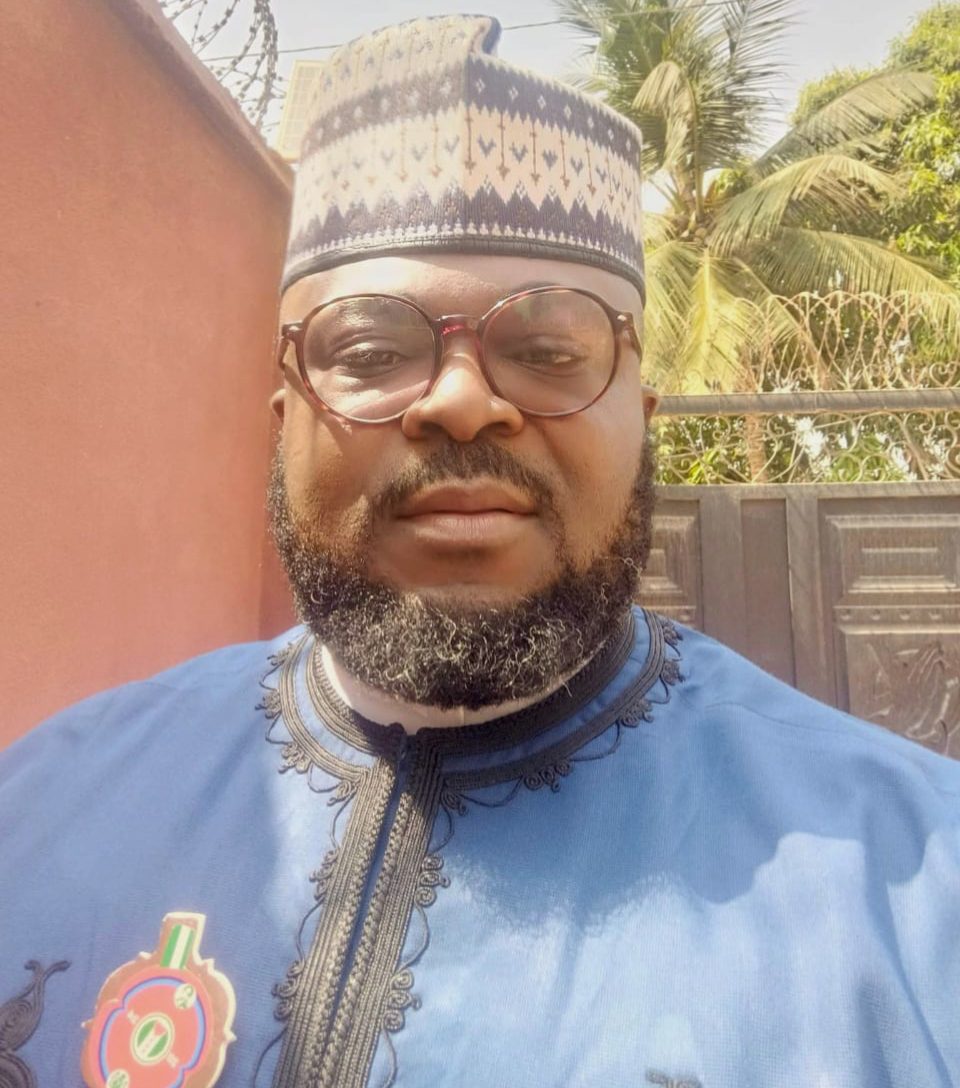
The Chairman and National Coordinator of the Tinubu National Continuity Initiative (TNCI), Comrade Oladimeji Odeyemi, has expressed confidence in President Bola Tinubu’s re-election prospects, calling for APC unity and praising Imo State Governor Hope Uzodimma’s role in strengthening the party’s presence in the South-East.

In this interview, Odeyemi speaks on the Tinubu administration’s economic reforms, infrastructure development, military welfare, insecurity, local government autonomy, APC reconciliation, the proposed 2027 presidential contest and the need for coordinated political mobilisation ahead of the general elections.
Why has your group, the Tinubu National Continuity Initiative, decided to mobilise support for President Tinubu’s re-election in 2027?
Our position is that leadership should be assessed based on policies, performance, challenges and the prospects of completing ongoing programmes. We believe President Tinubu deserves a fair assessment of the direction he has chosen for Nigeria and an opportunity to consolidate the reforms his administration has initiated.
We recognise that Nigerians are still grappling with economic difficulties, but we also believe that abandoning reforms before their long-term effects can be properly assessed could create further uncertainty. The TNCI intends to engage citizens, explain government policies, listen to communities and encourage informed participation in the democratic process. We want Nigerians to examine the evidence, ask questions and consider the country’s future when making their electoral decisions. For us, continuity must mean more than keeping an individual in office. It must involve sustaining useful projects, improving implementation, correcting mistakes and ensuring that economic recovery translates into better living conditions for ordinary Nigerians.
The administration’s economic policies have attracted criticism over their immediate effects. How do you defend them?
We must acknowledge the difficulties Nigerians have experienced. The removal of the petrol subsidy and changes to foreign exchange arrangements have brought significant adjustments for households and businesses. Inflation, transportation costs and food prices have placed considerable pressure on families, particularly those on fixed incomes.
However, we believe that longstanding economic distortions had to be addressed to create a more sustainable foundation for growth. The important question is whether the resulting savings, investments and reforms are producing measurable benefits.
I believe President Tinubu’s second term will provide an opportunity to deepen investment in agriculture, manufacturing, electricity, small businesses and employment. We also expect the government to strengthen social protection and communicate its policies more effectively.
Our responsibility is not to tell Nigerians that their difficulties do not exist. Rather, we want to encourage an honest discussion about what has changed, what remains unresolved and what must improve. Economic reform will only command lasting public confidence when citizens begin to experience its benefits in their homes and workplaces.
What is your assessment of the administration’s infrastructure programme?
Infrastructure is central to economic development because roads, railways, ports, electricity and efficient transportation reduce the cost of doing business.
The administration has continued to pursue major road and transportation projects. When completed and properly maintained, such projects can connect agricultural communities to markets, improve logistics, attract investment and create economic opportunities.
Our initiative will encourage Nigerians to assess these projects based on their actual outcomes. A road that reduces travel time, a railway that moves goods efficiently and a reliable electricity supply that helps businesses remain operational are tangible benefits citizens can evaluate.
Ultimately, infrastructure development must be accompanied by effective implementation, maintenance and accountability to ensure that public investments deliver value.
President Tinubu has approved a substantial salary increase for military personnel. What is your assessment?
We commend President Tinubu for his commitment to improving the welfare of members of the Armed Forces. The reported salary adjustment is an important intervention for personnel who undertake dangerous assignments in defence of the country.
Better remuneration can contribute to morale, retention and the dignity of military service. I also commend the Minister of Defence, General Christopher Gwabin Musa (retd.), and the Service Chiefs for their contributions to national security.
The President’s support for the Armed Forces should also be considered alongside initiatives aimed at expanding military capacity, including the reported expansion of the Nigerian Army into 12 divisions and the recruitment of additional personnel.
I particularly commend the leadership of the Nigerian Army for the infrastructural development taking place across its formations. Projects such as the Bola Tinubu Barracks in Abuja, the Nigerian Army Depot in Osogbo and barracks projects in different states reflect the importance of providing appropriate facilities for military personnel.
I also acknowledge the contributions of former Chief of Army Staff, Lieutenant General Tukur Buratai (retd.), particularly his role in advancing the Nigerian Army Aviation initiative and other institutional developments during his tenure.
However, military welfare must go beyond salaries and infrastructure. Personnel require modern equipment, reliable intelligence, medical care, insurance, accommodation and adequate support for their families.
We must equally recognise that insecurity remains a serious national challenge. Terrorism, banditry, kidnapping and other forms of violence continue to affect communities. Nobody should suggest that every security problem has been resolved, although we believe that sustained efforts and improvements in operational capacity are important to confronting these threats.
I commend the Chief of Army Staff, Lieutenant General Waidi Shaibu, and other Service Chiefs for their service. The government must continue investing in professional training, intelligence gathering, modern equipment and accountability, while strengthening coordination among security agencies.
What is your advice to the Minister of the Federal Capital Territory, Nyesom Wike, regarding political mobilisation for President Tinubu?
Minister Wike has publicly demonstrated support for President Tinubu, and his political influence should not be dismissed. However, political support becomes more effective when it is coordinated with the recognised structures of the party whose candidate is seeking election.
If the minister intends to contribute meaningfully to President Tinubu’s re-election bid, I would encourage constructive engagement between his political associates and the APC leadership.
A broad coalition can be useful, but it must have clear objectives, transparent coordination and a shared understanding of the campaign’s direction. It should not operate as a parallel structure competing with the party machinery.
My advice is that Wike and his associates should work out an arrangement that integrates their mobilisation efforts with established APC structures while respecting the contributions of existing party members.
Unity does not require everyone to abandon their political identity, but it does require a common understanding of how they can work together towards a shared objective.
Senate President Godswill Akpabio faces political calculations over the next dispensation. What should guide discussions about the next Senate leadership?
Senator Akpabio is an important political figure, but the Senate presidency is an institutional office, not a personal possession.
The next Senate leadership will depend on the composition of the National Assembly after the election, the decisions of senators and the applicable constitutional and parliamentary procedures. No individual should assume that the position is guaranteed before the electorate has returned lawmakers for another term.
The principle of first among equals is relevant here. The Senate President presides over the chamber but remains a senator among colleagues whose constitutional responsibilities must be respected.
My advice to political leaders is to exercise restraint, concentrate on their current responsibilities and avoid creating unnecessary divisions through premature discussions about future offices.
Akpabio can contribute to party cohesion and legislative effectiveness without allowing the question of succession to become a source of tension. Ultimately, the institution and the country must come before individual ambition.
Governor Hope Uzodimma is regarded as an important figure in the South-East and the APC nationally. What makes his leadership relevant to the 2027 contest?
Governor Hope Uzodimma of Imo State, who chairs the Progressive Governors Forum, occupies an important position in the South-East and within the APC nationally.
His experience in party politics, legislative service and state administration gives him an established network through which he can engage political stakeholders.
He has remained an influential APC figure despite the party’s historical challenges in the South-East. His ability to engage party members, elected officials, community leaders and other stakeholders makes him relevant to efforts to strengthen the party’s presence in the region.
His contribution should also be assessed through the record of his administration, including infrastructure, public services, security and economic opportunities. Political mobilisation alone should not be the sole measure of a governor’s performance.
His reported appointment as secretary of the APC Presidential Campaign Council for 2027 further places him in a position to contribute to national campaign coordination.
I believe his experience can be useful in encouraging dialogue and building cooperation across the South-East. All APC leaders in the region must join hands with him to ensure effective mobilisation. The objective should be to persuade citizens through engagement, credible policies and respect for their concerns rather than assume that regional support can be delivered by any single individual.
How can Uzodimma help Tinubu and the APC strengthen their votes and position across the South-East?
He can help by promoting a consistent relationship between the national party leadership and stakeholders across the region. He has played an important role in connecting the APC with political actors in the five South-East states, and his influence has contributed to the party’s mobilisation efforts.
However, the APC must also demonstrate that the South-East has a meaningful place in national decision-making. Political appointments and representation matter, but so do investment, infrastructure, security and economic opportunities.
If the APC wants broader acceptance in the region, it must listen carefully to the concerns of communities and respond with policies that address their needs.
Uzodimma’s role should therefore combine political organisation with stakeholder engagement, effective communication and a commitment to ensuring that the region’s concerns receive adequate attention at the national level.
How important is Uzodimma’s history of service and dedication to the APC?
His history within the party provides political experience and institutional knowledge. He understands the importance of organisation, alliances and grassroots engagement.
However, past service should not exempt any leader from accountability. The relevant question is how that experience can contribute to party cohesion, credible policy communication and effective mobilisation ahead of the 2027 elections.
His position as Chairman of the Progressive Governors Forum and his reported campaign responsibility provide opportunities to translate his experience into coordinated work across the party.
The APC needs leaders who can build bridges, manage differences and encourage cooperation among stakeholders. Uzodimma can contribute to these objectives by working with other governors, party leaders and grassroots organisations.
**What could make his contribution pivotal to the APC’s 2027 prospects?**
His contribution could be significant if he strengthens relationships between the national campaign and local communities, encourages constructive political competition and ensures that the party’s message addresses regional concerns.
The South-East is politically diverse, and the APC needs a unifying figure who can help bring stakeholders together and strengthen the region’s participation in national politics.
Uzodimma’s challenge is to build trust through engagement, organisation and demonstrable results. These are areas in which he has gained political experience and where he can make a meaningful contribution to the APC’s campaign.
President Tinubu’s decision to entrust him with important political responsibilities reflects the value placed on his experience and organisational capacity. He must now work with other leaders to translate those responsibilities into effective mobilisation and stronger relationships with voters.
**What are your thoughts on other politicians expected to contest the presidency against Tinubu in 2027?**
The presidential contest is expected to feature competing political interests and different proposals for Nigeria’s future. However, our initiative supports President Tinubu because we believe his programme of economic restructuring, infrastructure development and institutional reform deserves to be assessed alongside its difficulties and outcomes.
We consider continuity a legitimate argument in the presidential race. Our intention is to explain why we believe continuity offers a worthwhile option while encouraging voters to examine the candidates, compare their proposals and make informed decisions.
We believe that political competition should be based on ideas, policy alternatives and records of public service. Nigerians deserve campaigns that address their concerns and present credible proposals for tackling the country’s challenges.
Local government autonomy remains an important governance issue. What is your position on it?
Local government autonomy is important because local councils are closest to the people and are expected to address basic needs in their communities.
For autonomy to produce meaningful results, councils must have the institutional capacity, financial accountability and administrative discipline required to deliver services. Resources should translate into improved roads, primary healthcare, basic education, sanitation and other essential services.
Autonomy must also come with transparency and effective oversight. Local government officials should be accountable to their communities, while relevant institutions must ensure that public funds are properly managed.
Our position is that strengthening local governance should be part of the broader effort to improve service delivery and deepen democratic participation across Nigeria.
Finally, what message do you have for Nigerians as political mobilisation intensifies ahead of 2027?
Our message is that democracy works best when political engagement is peaceful, informed and respectful. Nigerians should ask difficult questions, demand accountability and judge every administration by its record.
The Tinubu National Continuity Initiative intends to promote dialogue about the administration’s policies and make the case for continuity where we believe it is justified. We must also listen to people who disagree with us.
The 2027 election should be about the direction of the country, the quality of public leadership and the future Nigerians want for their children. Political support must be earned through credible arguments, responsible conduct and policies that respond to the needs of the people.
We commend the Nigerian Army and all security personnel who continue to serve under difficult circumstances. We also urge political leaders to avoid inflammatory language and ensure that political competition does not threaten national peace. Our commitment is to lawful mobilisation, constructive engagement and a democratic process in which Nigerians can freely determine their future.