
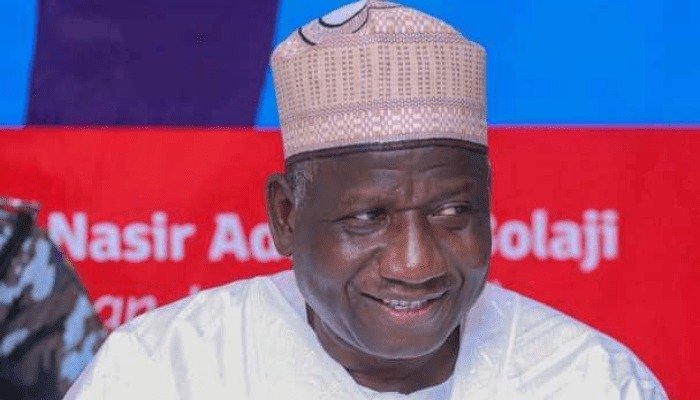
The 2023 presidential candidate of the Action Democratic Party (ADP), Engr. Sani Yabagi, has expressed concerns over perceived lopsidedness in federal appointments which has continued to generate national debate, warning that concentration of key national sectors within a narrow circle could erode public trust and weaken national inclusion.
While speaking on ‘Frontline’, a current affairs programme on Eagle 102.5 FM, Ilese-Ijebu, Yabagi cautioned that allowing strategic sectors to be dominated by a limited group may create strong perceptions of imbalance and reduce confidence in government institutions.

Yabagi stressed that Nigeria’s governance structure must reflect the country’s diversity, insisting that no single region or group should dominate critical sectors such as oil and gas, finance, and other strategic areas of the economy.
According to him, inclusive governance remains essential for national stability, economic confidence, and sustainable national development.
During the programme, reference was made to figures released by the Presidency through the Special Adviser on Public Communication, Sunday Dare, outlining the regional distribution of federal appointments. While the figures show varying numbers across geopolitical zones, Yabagi maintained that the influence and strategic importance of positions matter more than numerical spread, particularly in sectors related to economic and financial decision-making that directly affect citizens.
Speaking on refinery rehabilitation and privatization debate, particularly the Port Harcourt refinery rehabilitation project, and the reported $1.5 billion spent on the facility, the ADP stalwart observed that recent positions taken by the Nigerian National Petroleum Company Limited (NNPCL), alongside comments by former Vice President Atiku Abubakar, have further intensified discussions on whether privatization may provide a more sustainable solution for Nigeria’s refinery industry.
Questioning the current structure of the national oil company, Yabagi argued that although the Nigerian National Petroleum Corporation was commercialized and rebranded as NNPCL, government influence over the company remains substantial. He maintained that ownership and decision-making powers are still largely tied to government institutions.
He explained that NNPCL is held by the Ministry of Finance Incorporated and the Ministry of Petroleum Resources Incorporated, which he said hold the company in trust for Nigerians but remain under government control through appointments and oversight. Yabagi warned that weak governance structures, if not properly addressed, could put the country’s natural resource wealth at risk.

Yabagi concluded by calling for open national dialogue on governance, institutional reforms, and national unity, stressing the importance of strengthening institutions to prevent recurring governance failures and ensure that future leaders do not repeat past mistakes. He urged Nigerians to focus on building systems that promote fairness, accountability, and long-term national stability.