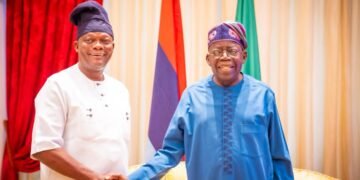

Nigeria and, by extension Africa, is on the threshold of another foreign conquest or colonization. Observers have warned of the onset of a new ‘Scramble for Africa’, warning so strong it resonated with the Nigerian President Bola Ahmed Tinubu, the newly elected Chairman of the Economic Community of West African States (ECOWAS). The enraged President issued a stern warning: Africa is resolute to prevent a repeat of its dark colonial past. He stressed: “The bad that took place in the past must stay there. It shall never be repeated.” He premised his proposition on development and good governance to ensure a prosperous and indomitable Africa. There is need, arising from the foregoing, to explore the background to this stringent warning.
China’s growing influence and suspicious footprints in Africa in the past two decades has attracted the attention of keen observers. This is against the backdrop of efforts by other global competitors to checkmate China’s growing influence and hegemonic projects in the most resourced yet vulnerable continent, and to grab their own share of “the African pie”. From the lens of analysts, Africa is gradually sleep-walking into another form of colonialism, as the scramble for its resources and ensuing quest for influence and political control by the West and Asia,
intensifies. Africa, they note, has again become a target for new global power rivalry informed by unbridled quest for acquisition of its natural resources. Neo-colonial forces and other emerging economic powers have enlisted in the race to extract as much as possible from Africa to grow their economies and attain global reckoning. In this scheme, the players would spare no means, to attain their goal. Conventional and non-conventional strategies are all instrumental. China, US, Europe, Russia, Turkey and even Indonesia are all contesting for the African soul and soil.
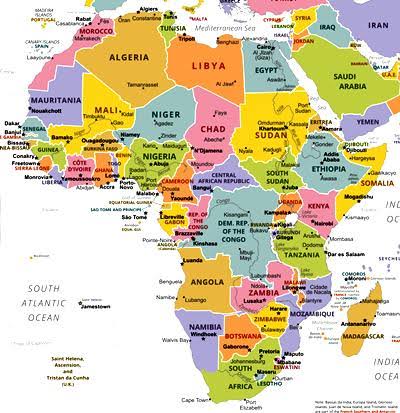
The new contest has generated postulations that Africa may soon witness a repeat, dissimilar though, of the partitioning of 1884. It would appear that the continent has already positioned itself for such re-conquest, demonstrated by the shameless regular line-ups of its leaders before hosting presidents in the expanding Africa/One-nation summits. US-Africa, China-Africa, Russia -Africa, Japan-Africa, Turkey-Africa, Brazil-Africa summits are becoming the new normal. Individual Western and Eastern countries now treat an entire continent of 55 countries as if it is a single state. Each player is occupied in its own turf. Using all means to court or control Africa. Among other open and hidden activities in Africa, Russia is exploiting fragile West African States; China is establishing military presence, aimed at gaining strategic foothold in Africa and breaking the West’s monopoly. Europe maintains a strong neo-colonial presence and influence in Africa, while US ramps up its declining influence and power.
Some experts say that Africa’s quest to transcend conflicts, wars, poverty and political turmoil will reconfigure the new scramble for its resources, different from its previous experience during colonialism. While this generalized scenario is worrisome, the main concern of many observers is China, which has gained massive trust and foothold in Africa more than any other player in nearly three decades. Its disguised policies and activities are viewed as an ominous danger for Africa. Essentially, Chinese activities are suspected, above any other factor, for the evolving trend towards possible recolonization of Africa.
China’s approach to its relations with Africa has been hugely interesting. In 1996, the then Chinese President pledged to treat African states as equals, and pursue mutually beneficial development. Since then, Beijing has tactically and repeatedly identified itself with Africa as a developing nation in a win-win relationship and equal partnership. This tactical diplomacy has been accompanied by massive economic assistance to African countries, an approach that has swayed the loyalty of many African countries from the West to China.
The import of these ‘benevolent’ acts for Africa’s security and sovereignty are not lost on keen observers of China’s underhand tactics in the continent. Some allege that Beijing uses its influence in Africa to gain preferential access to the continent’s natural resources, open up markets for Chinese exports, and enlist African support for its international aspirations. Others claim that Beijing views Africa as a prospective testing ground for the practice and subsequent export of its political and economic model. China has indeed ramped up its diplomatic, military, and cultural influence on the continent under the guise of what it calls “independent foreign policy”. Observers’ suspect the move is a pilot project of its global hegemonic agenda.
This narrative seems to be playing out already. Beijing has infiltrated the political and cultural landscape of the continent, using diplomatic and non-conventional means. It has tried to influence elections or install China-friendly leaders in some African countries. Its footprints could be seen in Zambia, Zimbabwe, Sierra Leone, among others. This is not unique to China anyway. Western countries are even more culpable in the matter. The US, especially, has been accused of sponsoring several coups and influencing the choice of political leaders even under democratic dispensation. There is fear, however, that the Chinese experiment might in the long run, undermine, stifle or roll back Africa’s march towards robust democratic governance and install China’s model of autocratic or fascism government.
China’s discernible next move is to use the media, culture and language, to mentally subjugate Africans, thus consolidating and legitimizing its hold on the continent. Adorno and Horkeimer of the Frankfurt School posits in their Critical Theory, that the bourgeoisie sustains its domination of the lower class, through psychological manipulation.

Zeroing on Nigeria, China has made considerable inroad into the ‘giant’ and most indispensable force – by every account- in Africa. It has developed strong economic and commercial ties; and is strengthening its military, educational and cultural relations with Nigeria. Nigerian media is not left out of Chinese government efforts, to imprint its own alternative narratives. ln recent years, Chinese entities have bought stakes in African media companies, to influence the content produced, in favour of Beijing.
On the hard side, Chinese loans have funded major developmental projects in Nigeria, including railways and roads, and helped to rehabilitate the main four airports namely Abuja, Lagos, Kano and Port Harcourt. Nigeria is increasingly dependent on China for most of its financial and commercial supply. Nigeria’s total borrowing from China rose to $4.29 billion in December 2022 from $1.39 billion in June 2015. China’s commercial relations with Nigeria is however highly lopsided. Nigeria no longer actively promote domestic production of goods including the most basic commodities. Rather, it depends on China for most of its domestic supplies. This has encouraged the Chinese to treat Nigeria as a dumping ground for most of their products and menial workers. An estimated one million Chinese moved to work in Africa within ten years, Nigeria inclusive. Nigerian locals bear the brunt of this indiscretion. Many have lost their jobs. In Kano, an estimated 28,000 textile workers lost their jobs to Chinese imports and local manufacturers as of 2015. Aba shoe industry was not spared. This situation weighs heavily against Nigeria’s mono-product export, namely fossil fuel, to China.
Nigeria’s China loan-dependence, whose terms are dictated and mainly favorable to China, constitutes an even greater risk for the country. The import of this is not lost on risk-analysts, who have urged Nigeria and Africa by extension, to apply caution in its dealings with China. Some African countries are already victims of what is called Chinese debt-trap diplomacy.
China’s attempt at ultra–colonization adopts a cocktail approach. This include ideological orientation, using cultural and educational instruments. Chinese cultural and language institutes are sprouting all over Africa, pari-pasu with the increased movement of African students to China. Major African local languages are being integrated into Chinese tertiary educational curriculum. For instance, Nigeria’s Yoruba language has just been adopted in a University in China. Mandarin has already become part of the curriculum in South African schools, in addition to the Chinese Confucius institute, viewed with suspicion in other continents. China is also stepping up its military presence in Africa. It has established a permanent military base in Djibouti. Nigeria hosted its Warships on a “Port Call” few weeks ago, on a supposed friendly visit.
Regrettably, Nigeria, the much-acclaimed giant and hope of Africa, remains stuck in its own quagmire. Its African siblings seem to perambulate. As Africa’s abundant earth resources gets coveted by vision-driven and future-oriented countries, Africa remains beggarly and subservient to its assailers. Self-serving and visionless leaders may not mind “selling” their people again, for filthy lucre and pecuniary gain. The devalued, disoriented and disillusioned bourgeoning youth population, seems to lack intellectual and emotional capacity to resist the potential forces of invasion. Two scenarios unfold: An African torn apiece by contesting world powers or one reinvented as China’s overseas territory or colony. It’s a scary scenario!
China has poor record of human rights and liberal values of the West. Its rule would therefore be worse than that of the West. It will be brutal, merciless and subsuming. Africa’s past colonial experience may compare as leisure walk to the Chinese one. The ECOWAS President would have none of this. Africa must be saved.
Who then takes the lead and who will brace the odds? It is Nigeria. Africa’s natural leader by endowment. The one whose voice once roused the great umpires of the world. The crucial question is: How ready is Nigeria to take on the gauntlet? Are its leaders weaned from the breast? Are the beautiful ones born? How many present and prospective African leaders love their people sufficiently to self- sacrifice for its future? As we write, Nigeria, the expected trail-blazer, is still enmeshed in a quagmire of spineless, visionless, self-serving leadership breeding system. Its leaders are neither value-driven nor future -oriented. They lack the will to upturn the status quo.
Not to despair, as dismal as the situation presents, there is still hope for the continent. There is a silver lining on the horizon. Africa can break off its shackles. Where there is a will, there is a way. Necessity, they say, is the mother of invention. Africa can turn the tide if it can produce honest, vision-driven leaders. Pragmatism and optimism are essentials. A decapitated or partitioned Africa benefits few. Majority are the losers. Present generations of past African leaders, who traded their people, are inadvertently reaping from the poisoned chalice of their forebears. African leaders must consider this and embrace the philosophy of “power in unity” without subservience or collective line–up before less endowed or supposed economic superiors.
African Leaders! Be Statesmanlike. Build your people, develop your economy. Collectively and brazenly resist efforts to break your ranks or compromise the integrity of your systems. Mobilize and marshal your diaspora assets for speedy development. Nigeria and Africa must prevent re-colonization or Chinese buy-over, at all costs.
Esther Ogundipe
A Public Affairs Analyst writes from Abuja.
estherogundipe03@yahoo.com