
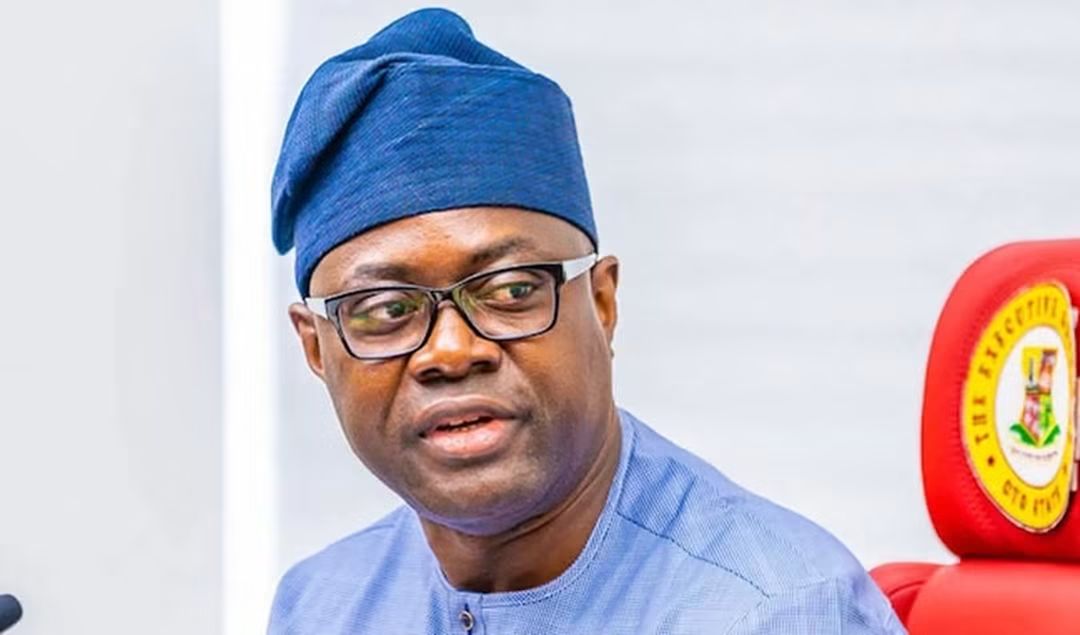
Politics is often described as a game of perception as much as performance. As the countdown to the 2027 general elections gradually begins, Oyo State is witnessing an increasingly heated political atmosphere, with Governor Seyi Makinde emerging as the central figure in the battle for public opinion.


Every administration reaches a stage where governance shares the spotlight with politics. For Makinde, that moment appears to have arrived. The governor, who assumed office in 2019 on the platform of the Peoples Democratic Party (PDP), has built the Omituntun agenda around infrastructure renewal, education, healthcare, agribusiness, security and economic development. Today, however, he finds himself at the centre of sustained political scrutiny.

The opposition, led largely by the All Progressives Congress (APC), has intensified its criticism of the governor’s policies, leadership style and political direction. Such criticisms are expected in a democracy, where opposition parties are duty-bound to question government decisions, present alternatives and convince the electorate that they can govern better.
One of the major arguments advanced by Makinde’s critics is that the governor has struggled to sustain political relationships. They cite the departure or political distancing of some prominent figures who contributed to his emergence in 2019, including Alhaja Mulikat Adeola-Akande, Senator Hosea Agboola, Chief Bisi Ilaka and several others. To the opposition, these developments suggest an inability to effectively manage political alliances and retain trusted associates.
Supporters of the governor, however, reject that conclusion. They argue that politics is dynamic and that shifting alliances are common in every democracy, often driven by personal ambition, changing interests and evolving political calculations. According to them, the fact that political relationships may no longer be as cordial as they once were does not translate into a failure of governance or diminish the achievements of an administration with a clear vision.
They insist that the real test of leadership is not the number of political associates who remain loyal but the tangible impact of government policies on the lives of ordinary people.
To them, Makinde’s record speaks for itself. They point to massive investments in road construction and rehabilitation, the upgrading of schools and healthcare facilities, improvements in security architecture, rural development, agribusiness initiatives and urban renewal projects across the state. They also highlight efforts to attract both local and foreign investments as evidence of an administration focused on sustainable growth.
Another area frequently cited by supporters is the administration’s consistent payment of workers’ salaries and pensions. They argue that prompt salary payments have strengthened household incomes, boosted consumer spending, supported small and medium-scale businesses and stimulated economic activities across Oyo State. Contractors executing government projects are also said to receive payments promptly, ensuring continuity of projects, job creation and increased commercial activities in host communities.
Beyond infrastructure and economic management, supporters point to the recruitment of teachers and health workers, investments in education, reforms in the healthcare sector, youth empowerment programmes, agricultural interventions and social welfare initiatives as evidence of a government determined to improve the quality of life of its citizens.
They acknowledge that no government is without shortcomings and that criticism remains an essential ingredient of democracy. However, they argue that some political commentators and self-styled analysts have moved beyond constructive criticism to narratives aimed at undermining public confidence in the administration and distracting the governor from governance.
Political observers note that such heightened criticism is almost inevitable as another election cycle approaches. Across democracies, incumbents often become the primary targets of political attacks, with every policy decision subjected to intense scrutiny. The closer elections draw, the sharper the contest for public perception.
For Governor Makinde, perhaps the greatest challenge is maintaining the delicate balance between governance and politics. While political opponents intensify their campaigns, the expectations of the people remain unchanged. Roads must be completed, schools improved, hospitals strengthened, investments attracted and economic opportunities expanded.
History has shown that political narratives may shape public debate temporarily, but lasting judgments are often based on measurable outcomes. Governments that remain focused on service delivery frequently allow their performance to speak louder than political rhetoric.
As Oyo State moves steadily towards another electoral season, debates, criticisms and counter-criticisms will continue to dominate the political landscape. The opposition will seek to convince voters that the government has fallen short, while supporters will continue to defend what they regard as one of the state’s most impactful administrations.
In the end, the verdict will not rest solely on political alliances won or lost, nor on the volume of criticism directed at the governor. It will be determined by the people of Oyo State, who will weigh the administration’s policies, projects and overall impact on their lives.
In politics, backlash is inevitable. But history also shows that leaders are remembered not merely for the criticisms they endured, but for the vision they pursued and the legacy they left behind. Whether Governor Seyi Makinde’s enduring legacy will be defined by the political backlash surrounding him or by the vision that has shaped his administration is a judgment that only time—and the people of Oyo State—can ultimately deliver.