


In recent years, the slogan “America First” has echoed across global politics, championing a policy that prioritizes national interests, economic self-reliance, and protection of local industries.
Coined prominently during Donald Trump’s presidency, it emphasized putting American citizens, jobs, and security ahead of international commitments, often through protectionist trade measures and a focus on domestic growth.
While controversial, it resonated with many who felt globalization had left their communities behind.
But what if we scaled this idea down—not to a nation, but to a town?
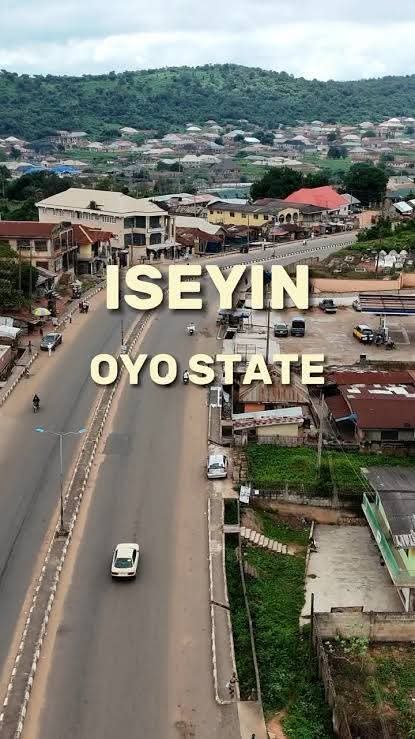
In Nigeria, where federal and State resources often feel distant from grassroots realities, could a local community adopt an “Iseyin First” agenda? Iseyin, a historic town in Oyo State’s Oke-Ogun region, renowned as the home of Aso Oke (the iconic Yoruba handwoven fabric), offers a compelling case for why such an approach might not only be possible but necessary.
Iseyin is a jewel in Oyo State’s crown. Often called the “Home of Aso Oke,” it is more than just a town—it’s a cultural powerhouse.
Located about 100 km north of Ibadan, it is the headquarters of the Oke-Ogun zone and one of Oyo State’s largest urban centers after Ibadan, Ogbomoso, and Oyo.
With a population exceeding 540,000 accordingto 2023 Population Projected Estimate, Iseyin boasts a rich Yoruba heritage, fertile lands suitable for agriculture, and institutions like the LAUTECH College of Agriculture, SAF Polytechnic, Iseyin College of Science and Health Technology and the State NYSC orientation camp.
At its heart is the thriving Aso Oke weaving industry.
This traditional cotton-based textile, woven on horizontal looms primarily by skilled artisans (many of them men passing down generational knowledge), is worn for weddings, chieftaincy titles, festivals, and coronations across Yorubaland and beyond.

Types like Etu, Alaari, and Sanyan carry deep cultural symbolism, with modern designs incorporating innovative patterns inspired by daily life.
Yet, despite this cultural wealth, Iseyin faces familiar Nigerian challenges: inadequate infrastructure, youth unemployment, rural-urban migration, and limited access to modern markets for its crafts.
Initiatives like the cassava-based sorbitol factory (Africa’s first, creating thousands of jobs) by Psaltry International Company Limited, show potential, but much more could be done if priorities shifted locally.
Efforts of the Current State Administration in Iseyin’s Infrastructural Development
Under Governor Seyi Makinde’s administration since 2019, Oyo State has invested significantly in Iseyin’s infrastructure, focusing on connectivity, education, and agricultural support to drive economic growth.
These projects align with the State’s broader agendas, including the 2026 budget of ₦892 billion, which emphasizes infrastructure expansion.
Past infrastructural development benefited by Iseyin include the reconstruction of the 65km Moniya-Iseyin Road, completed in 2021, which has enhanced transportation links to Ibadan and improved agricultural trade.
Also, Iseyin has enjoyed the the construction of the 76.67km Iseyin-Fapote-Ogbomoso Road, commissioned in 2024, connecting Oke-Ogun to other zones and boosting inter-regional commerce.
The establishment and inauguration of the LAUTECH Iseyin Campus (Faculty of Agricultural Sciences and Renewable Natural Resources) in 2023, with ongoing stakeholder engagements and visits by the governor as recently as December 2025 to address operational issues and ensure smooth functioning.
There is an ongoing upgrading of rural markets in Iseyin Local Government Area under the Rural Access and Agricultural Marketing Project (RAAMP), aimed at reducing post-harvest losses and improving market access for farmers.
Rehabilitation of 87km of rural roads under RAAMP, further supporting local agriculture and mobility and the ongoing monitoring and completion of projects like the 21.953km Oloko-Oyo-Orita Aloba Road in Iseyin, as part of commitments to finish all initiatives by 2027.
These efforts reflect the administration’s dedication to rural development, but they also highlight opportunities for more localized prioritization to maximize benefits for Iseyin residents.
What Would an “Iseyin First” Agenda Look Like?
Drawing inspiration from “America First,” an “Iseyin First” agenda would mean deliberately prioritizing the town’s residents, resources, and industries in decision-making—at the local government, community, and even state levels.
Here’s how it could manifest:
Protect and Promote Local Industries: Mandate preferential procurement of Iseyin-woven Aso Oke for government events, uniforms, and gifts in Oyo State. This was recently supported by the Oyo State government by enforcing the wearing of native attire with some touch of Aso-Ofi to work on Thursday, apart from the use of same on Friday, which has been in use before now.
Banks and financial institutions should provide subsidies or low-interest loans for weavers to modernize looms while preserving traditional techniques. Combat counterfeit imports by certifying authentic Iseyin products.
We have to invest in community infrastructure first by channeling local revenues and partnerships into roads, electricity, and markets that directly benefit Iseyin artisans and farmers.
Time has come to put all efforts to bear towards genuinely reviving potentials like the Ikere Gorge Dam for irrigation, tourism, and hydropower, creating jobs for locals before external contractors. By now we have seen the difference between reality and political promises or proclamation on Public-private Partnership (PPR) on the dam.
Since the Minister for Power, Adebayo Adelabu made the announcement on the concession agreement, we have not seen any sign of readiness at the project site, except for the road leading to the dam, currently being reconstructed by the Oyo State government.
There is need to continue to empower the youth and women locally by training young Iseyin indigenes in weaving, dyeing, and design, ensuring skills stay in the community.
Also important is the need to expand agro-allied ventures (like cassava processing) with a “hire Iseyin first” policy to curb migration to cities like Ibadan or Lagos. Here I have to give kudos to the management and owners of Psaltry International Company Limited for sticking to this part. I learnt Iseyin local government has the highest number of employees in the company.
It is pertinent to forge a cultural and tourism self-reliance front where we will host annual Aso Oke festivals as global attractions, with proceeds reinvested locally and partner with diaspora Yoruba communities to export Iseyin fabrics directly, bypassing middlemen.
Moreover, the Ado-Awaye Hanging Lake has come of age for an intentional global push. Strategic efforts should be made to not only projects its tourism potentials, but to allow tourism investors in with different shades of ideas that will make the site a darling of fun seekers.
I believe that a Community-Driven Governance will encourage town unions, traditional rulers (like the Aseyin of Iseyin), and youth groups to lead development plans, similar to community-led initiatives seen in other Nigerian projects.
This isn’t about isolation—it’s about building strength from within, much like how national “Nigeria First” policies aim to boost local content.
Why Now? The Case for Local Prioritization
In Nigeria, national agendas like the Renewed Hope Agenda or past plans (NEEDS, Vision 20:2020) often trickle down unevenly as we have seen how the Federal Government preferred to concentrate huge infrastructural projects in Lagos, while rural towns like Iseyin, despite contributing culturally and economically, feel sidelined.
An “Iseyin First” mindset could reverse this: stronger local economies mean stronger states and nation.
Critics might call it parochial, but in a federation, local empowerment drives national progress.
Just as “America First” sought to revitalize forgotten communities, “Iseyin First” could reignite pride in Oke-Ogun, preserve Yoruba heritage, and create sustainable wealth.
Imagine Iseyin not just as the home of Aso Oke, but as a model of grassroots renaissance.
Yes, we can—and perhaps we should—have an Iseyin First agenda. The looms are ready; the people are resilient. All that’s needed is the will to put Iseyin first.
-Alhazan Abiodun Rilwan is the Publisher of The Chronicler Newspaper