
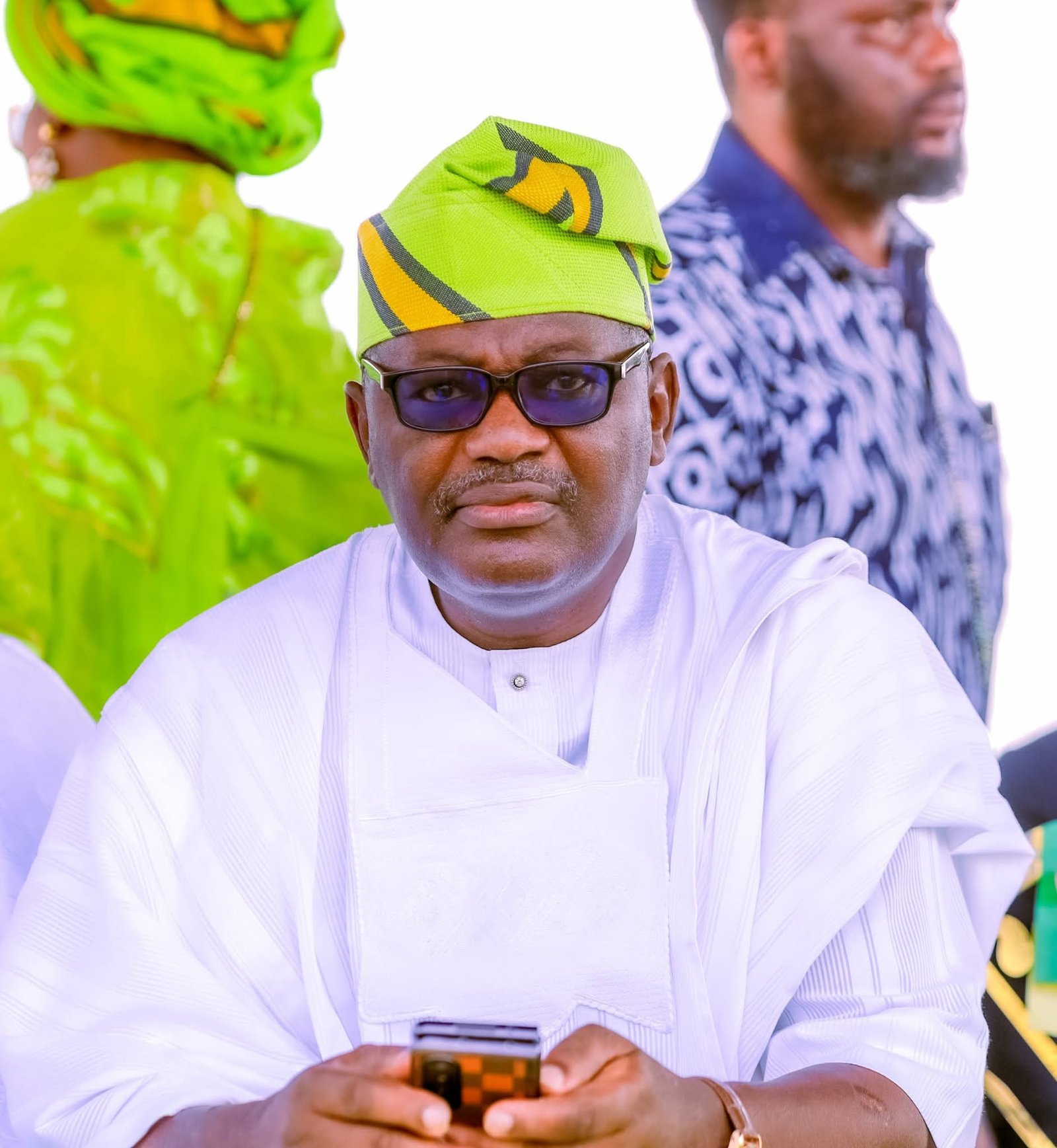
A member of the House of Representatives, Hon. Gboyega Nasir Isiaka, has said that the decision by Nigeria’s National Assembly to soften the clause mandating real-time electronic transmission of election results was driven by deep concerns over the country’s weak digital infrastructure, security vulnerabilities, and the risk of widespread voter disenfranchisement.


Speaking on Eagle 102.5 FM’s current affairs programme, ‘Frontline’, on Wednesday, Isiaka, who represents Yewa North/Imeko-Afon Federal Constituency of Ogun State, said lawmakers were forced to reconsider their earlier hardline position after intense negotiations and technical briefings during the conference committee harmonization process between both chambers of the National Assembly.
The House of Representatives had, in December, passed amendments to the Electoral Act that made electronic transmission of results mandatory. However, the Senate rejected the clause, insisting on the retention of manual collation as a fallback option. This disagreement triggered a conference committee, whose report was adopted last week, effectively dropping the mandatory real-time transmission requirement.
According to Isiaka, the reversal was not politically motivated, nor was it rushed, but rather informed by “superior arguments” rooted in Nigeria’s operational realities. “With the way our country is structured, you cannot guarantee stable network coverage in all polling units. It will be dangerous to put the entire electoral process solely in the hands of technology. Where live transmission is not feasible, presiding officers must be allowed to adopt manual alternatives. That was the logic behind the position eventually adopted”, he said.
Behind the reversal and what changed at the Conference Committee, Isiaka said that the conference committee, made up of equal numbers of lawmakers from the Senate and House, became the critical platform where the legislative rethink occurred.
He said the process involved extensive deliberations, negotiations, and technical engagements that exposed lawmakers to realities that could undermine electoral credibility if ignored.
“In the process of harmonising the bill, a lot of discussions happened; lobbying, debates, and negotiations. That is the normal legislative process. The House initially believed that only electronic transmission should be used. The Senate, however, argued that in cases where network coverage is unavailable, manual collation using Form EC8A should be allowed. When these arguments were examined closely, the Senate’s position prevailed”, he said.
Explaining that similar legislative reversals are not unusual, Isiaka said, “Even after both chambers pass a bill, the president can still raise objections and return it. That tells you that superior arguments can come up at any stage in the life of a bill.”
Elucidating on network gaps, security concerns, and the fear of voter exclusion, the Rep said, “At the heart of the amendment was the fear that enforcing mandatory real-time transmission could disenfranchise voters in rural and remote communities where Internet connectivity remains unreliable. Even if Internet penetration is said to be over 90 percent, what happens to the remaining 10 percent? Should their votes not count? Should their polling units be excluded?” he asked.
Isiaka added that “Nigeria covers over 900,000 square kilometres. There are thousands of polling units where network coverage is weak or completely absent. The law must reflect this reality. Aside technology issue, there are security concerns. There are risks of sabotage, equipment failure, and network collapse. We cannot gamble with something as sensitive as national elections”, he stressed.
Isiaka however dismissed claims that the ruling All Progressives Congress (APC) forced its position on the House, insisting that party affiliation becomes secondary once lawmakers assume office “Once you get to the National Assembly, you become a representative of the people first. Party affiliation becomes secondary. You must examine every issue critically and take positions based on national interest, not party directives.”
He added that the dissent witnessed on the floor of the House during the plenary session showed that lawmakers were guided by personal convictions rather than partisan loyalty. To him, “If it was purely a party decision, you wouldn’t have seen the level of disagreement and protests that happened on the floor.”
Speaking on speculation surrounding his governorship ambition ahead of the 2027 general elections, Isiaka confirmed his interest but said party processes would determine the final outcome.
“Yes, I am interested. But the process is just beginning. I believe in due process and internal democracy, and I will abide by the rules of the party”, he said.
While acknowledging the issue of manual collation and public trust deficit among Nigerians, Isiaka however argued that institutional safeguards still exist to protect electoral integrity. He said “There are party agents at polling units, ward levels, and collation centres. They all have copies of result sheets. Where there are discrepancies, there are processes for redress, including legal action.”
He added that no electoral system is completely foolproof, saying, “Even in countries that rely fully on electronic transmission, allegations still arise. There is no system that is 100 percent immune to manipulation. What we can do is to continuously improve.”
Talking on his grassroots representation, Isiaka highlighted his legislative interventions in addressing challenges facing border communities in Ogun State, particularly fuel supply restrictions imposed for security reasons. He said, “My motions focused on the hardship faced by border residents due to fuel supply restrictions. We have engaged security agencies to allow selective reopening of filling stations.”
He also disclosed that bills seeking the establishment of a Federal College of Education, a polytechnic institution, and an industrial park within his constituency are currently at different stages of legislative processing. “These are interventions aimed at addressing unemployment, youth development, and economic growth at the grassroots”, Isiaka said.