
Nigeria stands at a decisive moment. With a population now above two hundred million and more than two hundred and fifty ethnic groups spread across thirty six states and FCT, the country remains one of the most diverse societies on the continent. Our religious landscape is similarly balanced, with a near even distribution between Christians and Muslims. Diversity is therefore not an optional consideration. It is the very material out of which the Nigerian project must be woven.
Yet, the evidence of the past decade shows a country struggling to manage that complexity. Across roughly five years, independent conflict monitors recorded more than ten thousand violent incidents nationwide, resulting in somewhere between forty thousand and fifty thousand deaths. Most of these casualties occurred in the northern half of the country, where insecurity linked to insurgency, criminal networks and communal disputes has proved persistent. In some years, the North West and North East together accounted for more than four-fifths of recorded fatalities.

Communal and ethnically tinged violence has been particularly concerning. Across a recent four year period, national civil society trackers documented well over ten thousand attacks of varying scale, with total deaths in the tens of thousands. A significant proportion of these incidents involved villages, religious gatherings or farming communities caught in the crossfire of local disputes. In states across the middle belt, where farmers and herders compete over shrinking land and water resources, several thousand people were killed in clashes between 2020 and 2025 alone. Plateau, Benue and Kaduna repeatedly appear at the centre of these spirals of retaliation. There are emerging signs of similar tensions in parts of the South West (Ondo, Ekiti, Kwara and Oyo states), a development that warrants close attention. We must not forget the recent history of insecurity, sit-at-home and killings in the South East and this week’s judicial verdict on Mazi Nnamdi Kanu, sentencing him to life imprisonment. Therefore the data reflects that these realities are with us across the entire Nigerian landscape.
Religiously motivated violence remains a painful reality, though it is often intertwined with land, poverty and identity politics rather than driven solely by faith. When disaggregated, multi year datasets suggest that Christians appear to form a disproportionate share of recorded civilian deaths in some datasets, whilst Muslims have often borne heavier losses in areas affected by insurgency and banditry. Exact figures vary, but the broad pattern is consistent: all communities are suffering in different forms, often depending on geography rather than creed.
The common thread is not religion but weak institutions and in Nigeria, experience shows that institutional weakness appears to correlate with higher levels of local conflict. Where justice is slow, resentment hardens as citizens tend toward self-help. Where communities feel excluded from national decision making, suspicion spreads and sometimes the hardest hit is the next-door neighbour. The data makes this plain. What Nigeria faces is not a single security crisis but a tapestry of local disputes that flourish in the absence of trust.
Consider the recent seismic shifts within the Peoples Democratic Party (PDP). The National Convention hosted in Ibadan which is historically a venue for raucous dispute, manifested instead as an exercise in cold, decisive institutional discipline. In an atmosphere of unprecedented order, delegates moved to expel formidable heavyweights, including the serving Federal Minister Nyesom Wike and former Governor Ayodele Fayose. It was a potent demonstration that the collective will of a party can still assert itself over the influence of powerful individuals.
The narrative then shifted to the Wadata Plaza PDP Secretariat in Abuja, where the individuals expelled attempted to override the PDP National Convention’s resolve. The sealing of the PDP National Secretariat premises with barbed wire and the deployment of tear gas by Law enforcement followed this face-off. Yet, the response was telling. Rather than capitulation, the opposition displayed stoic conviction. The willingness of political actors to hold their ground, backing their words with action even amidst the fog of tear gas and intimidation by individuals serving the current Adminstration at high levels, suggests a hardening of democratic resilience. It reveals that disagreement need not result in fracture, and that the capacity to contest ideas, even under physical duress, remains a vital sign of a maturing, albeit beleaguered, democracy.
These contrasting events illuminate the central challenge facing Nigeria. Diversity without justice becomes instability. Representation without fairness becomes symbolism. Power without accountability becomes fragility. If we are to restore confidence in the national project, we must strengthen the institutions that manage our differences.

Four immediate steps could set us on that path.
First, Nigeria needs a National Rapid Response Security Trust Council. This body should integrate intelligence, harmonise the work of federal and state agencies, and draw on existing community security networks. Across the country there is an untapped security capacity that, if coordinated, could provide early warning and rapid protection for vulnerable communities.
Second, the country needs a standing virtual forum for interfaith and interethnic dialogue. This should convene traditional rulers, religious leaders, civil society actors and political representatives on a regular basis. Influence matters deeply in Nigeria. The right voice at the right moment can prevent escalation.
Third, justice must become visible. A national prosecution tracker for cases of communal and political violence, updated monthly, would send a powerful signal that violence cannot be used to negotiate political or economic advantage. A modest national compensation fund for victims’ families would also demonstrate moral responsibility.
Fourth, representation must be designed rather than assumed. Local security councils, advisory bodies and political associations should adopt inclusion quotas for gender, region, faith and youth. Nigeria’s diversity is a fact, but inclusion must be a choice. It must be built into the machinery of governance.
These reforms are not abstract ideals. They are achievable within three months using structures already in existence. What is required is focus, courage and humility. Power is transient, but the impact of ethical leadership endures.
The world is watching Nigeria closely. International discussions about our religious freedom record and democratic trajectory are not ceremonial signals. They reflect genuine concern about whether Africa’s largest democracy can hold together the threads of its immense diversity. Nigeria still possesses all the ingredients for national renewal, and the answer remains with us, but not for long anymore.
International partners are watching closely, but Nigeria’s future should not be a subject of outsourcing. Support may come from abroad—highlighting issues of insecurity, political intolerance, religious genocide, and school kidnappings, or offering solution sets if we fail to perform the needed surgical housekeeping urgently. However, the ultimate responsibility for stability rests with Nigerians themselves as the political, religious, economic and social stability of Nigeria is in our mutual best interest.
The stark reality is that we remain a country of hardworking citizens, creative thinkers and resilient communities. But the weave of the nation is under strain. If we reinforce it with justice, fairness, tolerance and constitutional order, it will not tear. It will strengthen. Nigeria’s multicoloured fabric can yet become a garment capable of weathering every storm. Our task is to weave with intention, integrity and courage.
About the Author:
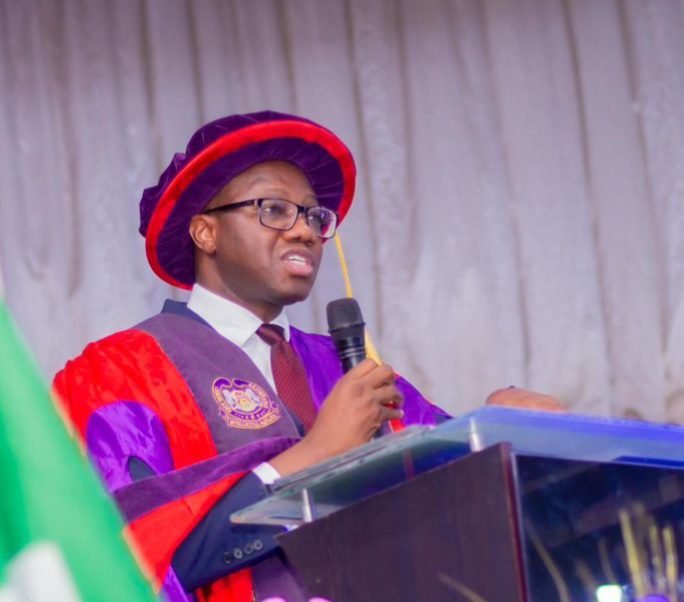
Amofin Beulah Adeoye is a legal and financial expert with international recognition for his work in forensic accounting, governance, and philanthropy. A First Class Law graduate from the University of Ibadan and a certified Fraud Examiner (CFE) and Associate Chartered Accountant (ACA), he previously served as Financial Advisory Partner at Deloitte & Touche West Africa, where he led forensic services until his withdrawal in August 2024 to become active in political and community development efforts in Nigeria, for which he now has significant following and has received both local and international awards for his contributions. He maintains affiliations with multinationals across Europe, Asia, the US, and Africa spanning sectors such as healthcare, financial services, energy, logistics, and real estate. Adeoye is actively engaged with the Nigerian diaspora, and has facilitated strategic dialogues with community stakeholders across the globe and leads several philanthropic initiatives through the Beulah Adeoye Foundation.