
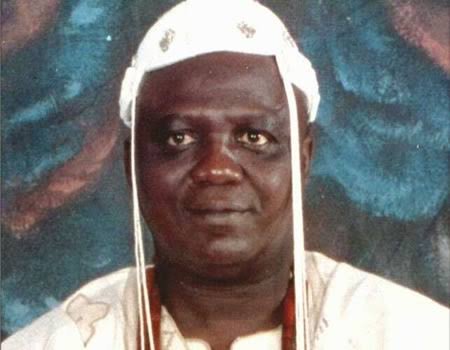
Ten years after his passage, the legacy of Oba Samuel Adegboyega Osunbade (Adeyelu II), JP, FCA, FCIS, the 21st Olugbon of Orile-Igbon in Surulere Local Government Area of Oyo State, remains a significant chapter in the history of the ancient community.


Oba Osunbade, who ascended the throne on July 24, 1992, passed away on October 14, 2016, at the age of 82. His decade-long absence has not diminished the memories of a monarch whose reign was marked by intellectual distinction, progressive leadership and a commitment to improving the welfare of his people.

As the community reflects on the tenth anniversary of his passing, his life offers an opportunity to celebrate a traditional ruler whose influence extended beyond the palace and whose contributions to community development helped reshape the narrative of Orile-Igbon.
A Monarch With an Exceptional Intellectual Background
Before his emergence as the Olugbon, Oba Osunbade had established himself as a distinguished figure in student leadership and international engagement.
He was also a reputable chartered accountant who built a distinguished career in the accounting profession. His professional accomplishments reflected his discipline, intellectual capacity and commitment to excellence, qualities that later enriched his service as a traditional ruler.
His involvement in the All-Africa Students’ Union, where he served as General Secretary, and his leadership of the Nigerian Union of Students in England and Ireland exposed him to international perspectives, diplomatic engagements and the aspirations of young Africans.
These experiences provided him with a broad understanding of leadership, governance and the importance of collective development.
One of the notable moments in his student activism came in 1967, when he led a delegation of Nigerian students from England to meet the Federal Military Government led by General Yakubu Gowon. The delegation sought to intervene in the national crisis that accompanied the outbreak of the Nigerian Civil War.
This intervention reflected a generation of Nigerian students who believed that intellectual engagement, dialogue and diplomacy could contribute to resolving national challenges.
His exposure to international affairs, his distinguished career as a chartered accountant and his involvement in matters of national importance distinguished him from the conventional image of a traditional ruler whose influence was confined to local customs and palace affairs.
A Reign That Changed the Community’s Narrative
The true measure of traditional leadership lies not only in the dignity of the throne but also in its impact on the lives of the people.
During his reign, Oba Osunbade raised the tempo of community development in Orile-Igbon, with emphasis on infrastructural improvement and the provision of basic amenities for his subjects.
His leadership brought renewed attention to the need to improve the living conditions of the people and strengthen the foundations of community progress.
Through his development-oriented approach, the palace became an important platform for advancing the aspirations of the community. His reign demonstrated that traditional institutions could play meaningful roles in mobilising people, encouraging development and complementing government efforts.
For a community with a rich cultural heritage, the provision of infrastructure and essential amenities represented more than physical improvements. It also reinforced the idea that traditional leadership should respond to the everyday needs of the people.
The impact of such a reign is not measured solely by the number of projects undertaken but also by the expectations it creates, the opportunities it inspires and the standard of leadership it leaves for future generations.
Beyond the Crown: A Legacy of Service
Oba Osunbade’s background in student activism, international engagement and professional accounting gave his traditional leadership a distinctive character.
He represented a blend of intellectual exposure, professional excellence, public service and traditional authority. His life illustrated how experiences acquired outside the immediate community could be brought home to support local development.
His reign also underscored the continuing relevance of traditional rulers in community advancement. Beyond their cultural and ceremonial responsibilities, monarchs can serve as advocates for development, custodians of communal values and rallying points for collective aspirations.
For Orile-Igbon, the memory of Adeyelu II is therefore tied not only to his position as the 21st Olugbon but also to the developmental direction associated with his reign.
Ten Years On, the Memories Remain
October 14, 2026, marks ten years since the departure of the revered monarch. A decade is a significant period in the life of any community, providing an opportunity to assess the past, appreciate achievements and consider the responsibilities of the present generation.
For the people of Orile-Igbon, remembering Oba Samuel Adegboyega Osunbade should go beyond the anniversary of his death. It should include a renewed commitment to the values of service, progress, intellectual development and concern for the welfare of the people that defined his public life.
His story is also a reminder that the strength of a traditional institution depends, in part, on the quality of leadership it produces and the enduring benefits that leadership delivers to the community.
Although he is no longer physically present, his place in the history of Orile-Igbon remains part of the community’s collective memory.
Ten years after his passage, Oba Samuel Adegboyega Osunbade, Adeyelu II, is remembered as a monarch whose reign helped redirect the development conversation in Orile-Igbon and whose legacy continues to inspire reflection on purposeful traditional leadership.
May his soul continue to rest in peace.