The Chairman of the Independent National Electoral Commission (INEC), Professor Joash O. Amupitan, SAN, has directed Administrative Secretaries across the 36 states of the federation and the Federal Capital Territory (FCT) to eliminate operational gaps, strengthen coordination and adopt a unified approach to election administration ahead of the 2027 General Election.

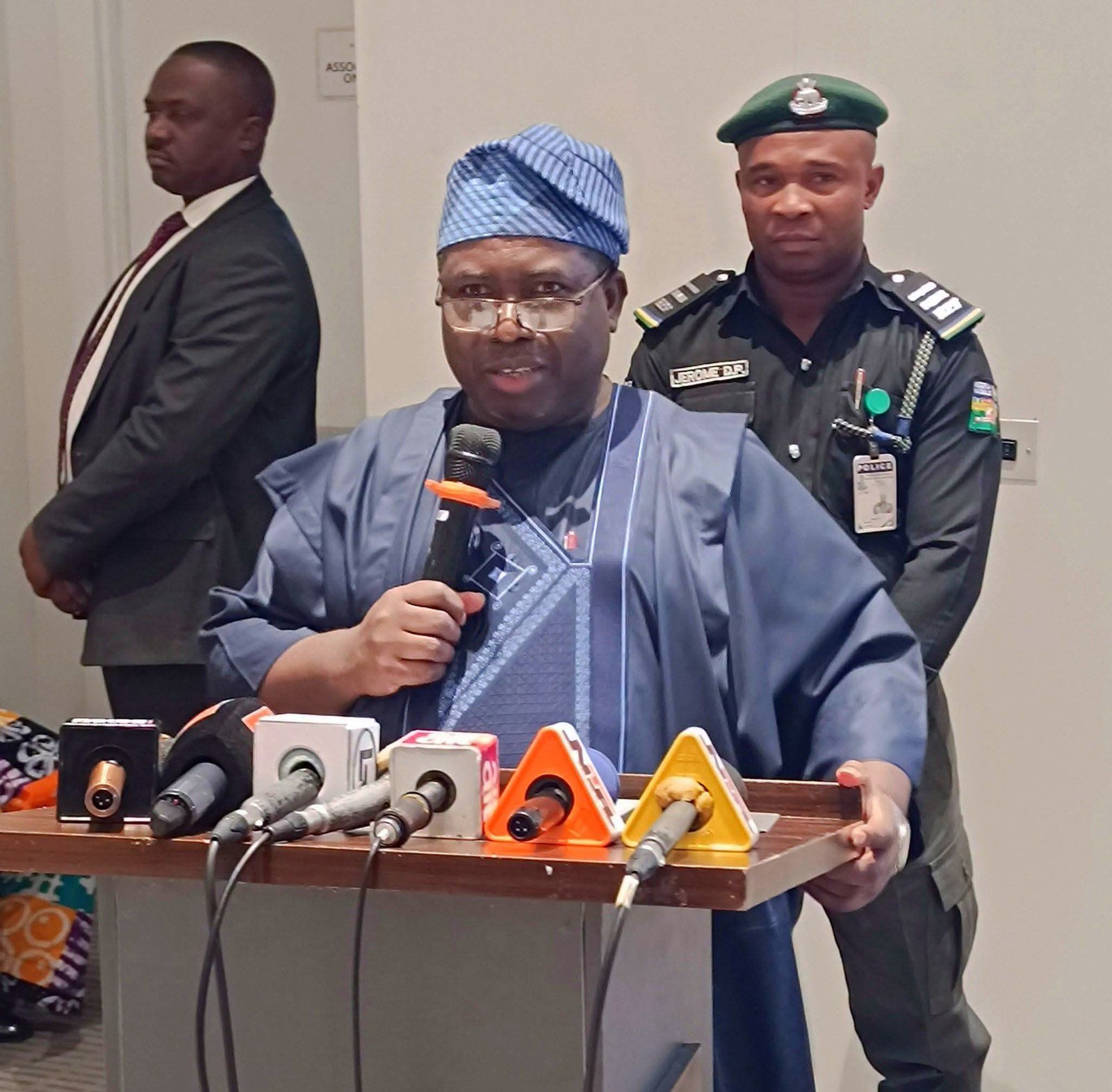
Amupitan gave the directive on Monday at the opening of a two-day Strategic Operational Workshop for INEC Administrative Secretaries in Lagos, describing the engagement as a specialised, election-focused operational exercise aimed at testing the Commission’s preparedness for the 2027 polls.
He said INEC had entered a critical stage in its preparations and could no longer afford varying interpretations of administrative responsibilities or disjointed operational practices across different states.
“We can no longer afford fragmented interpretations of administrative duties or disjointed operational practices from state to state,” the INEC Chairman said.
According to him, the workshop was designed to eliminate guesswork and ensure that Administrative Secretaries across the country operate under standardised national protocols.
Amupitan said the Commission was determined to convert lessons from recent off-cycle elections, particularly the Osun State Governorship Election, into a national operational standard capable of supporting the larger and more complex 2027 General Election.
He noted that recent elections had demonstrated that timely logistics, functional technology and administrative discipline could contribute significantly to transparent and credible electoral outcomes.
However, he cautioned that the controlled environment of a single-state election was significantly different from conducting elections simultaneously across the 36 states and the FCT.
The INEC Chairman said the Commission must therefore replicate successful operational models nationwide to guarantee effective election delivery in 2027.
At the centre of the new operational drive, Amupitan said, are the Administrative Secretaries, whom he described as the Commission’s chief technical, operational and administrative anchors at the state level.
While Resident Electoral Commissioners provide institutional leadership in their respective states, he explained that Administrative Secretaries are responsible for managing the day-to-day machinery of state offices, ensuring administrative continuity and overseeing processes that could determine whether elections begin smoothly and on schedule.
Earlier, the Resident Electoral Commissioner for Lagos State, Professor Ayobami Salami, urged participants to use the workshop to interrogate existing procedures, identify institutional gaps and develop practical solutions ahead of the 2027 elections.
Salami said the Commission’s decision to organise the two-day workshop underscored the importance attached to strengthening the capacity and operational readiness of Administrative Secretaries.
He noted that their ability to coordinate personnel, resources, logistics, finance, infrastructure and administrative processes was directly linked to the success of electoral operations.
The Lagos REC urged participants to bring their experiences and operational challenges to the table to enable the Commission to collectively develop solutions that could improve election administration across the country.
Salami also stressed the need for stronger coordination between administrative and technical functions, improved accountability and resilient systems capable of responding to emerging operational demands.
Five Critical Areas
Amupitan said the workshop would focus on five major operational areas considered critical to the success of the 2027 General Election.
The first is Continuous Voter Registration and Permanent Voter’s Card distribution, with state-level strategies expected to support a clean voter register and efficient PVC collection as Nigeria’s voter register approaches the 100-million mark.
The second is logistics and material management, covering the receipt, auditing, secure storage, deployment and reverse logistics of sensitive and non-sensitive election materials.
The third is the mastery of electoral technologies, including the Bimodal Voter Accreditation System (BVAS), INEC Result Viewing Portal (IReV), eEC&A, Election Monitoring and Support Centre (EMSC), CROMS, IOMIS and PFRAS.
The fourth area is human-resource and ad-hoc staff optimisation, particularly the recruitment, vetting and technology-competency training of election personnel.
The fifth is general administration and financial compliance, including administrative discipline, workflow automation and strict adherence to procurement and financial regulations.
New Operational Tracker
One of the major innovations announced at the workshop was the proposed Administrative Secretary Master Operational Tracker.
Amupitan said the standardised Excel-based tracker would be linked to the Commission’s EMSC dashboard and Election Project Plan, providing INEC Headquarters, Resident Electoral Commissioners and Supervising National Commissioners with real-time information on the level of preparedness in the states.
The system is expected to monitor critical areas such as election-material distribution, ad-hoc staff training and overall state-level readiness.
According to the INEC Chairman, the initiative would replace reactive crisis management with proactive monitoring and preparedness.
He added that the tracker would also serve as a permanent onboarding blueprint for future cohorts of Administrative Secretaries beyond the 2027 elections.
‘Your Leadership Matters’
Amupitan also delivered a strong leadership message to the Administrative Secretaries, warning that the quality of election administration at the state level would depend largely on the culture established within their offices.
“If you tolerate shortcuts, shortcuts will multiply. If you tolerate political interference, neutrality will deteriorate,” he said.
He stressed that documentation, punctuality, preparedness and compliance must become entrenched as part of INEC’s institutional culture.
The Chairman also urged the officials not to conceal operational problems, saying early reporting and escalation would enable the Commission to intervene before challenges develop into major electoral crises.
Secretary Warns Against Disharmony
The Secretary to the Commission, Dr Rose Oriaran-Anthony, also identified the relationship between Administrative Secretaries and Resident Electoral Commissioners as a critical area requiring urgent attention.
She said complaints concerning strained relationships between the two levels of leadership had continued to reach her, warning that such disharmony could negatively affect the Commission’s operations.
“We will not allow that to continue because where we do not have harmony, the Commission’s work will suffer,” she said.
Oriaran-Anthony urged the Administrative Secretaries to speak openly about challenges affecting their work, describing the workshop as a family gathering where difficult institutional issues could be honestly confronted and collectively resolved.
She said discussions at the workshop would also focus on lessons from the 2023 General Election, state-level financial management, logistics, assets, ad-hoc personnel, staff discipline, supervision and the management of the Commission’s image and reputation.
DAI Pledges Continued Support
A former INEC National Commissioner and Development Alternatives Incorporated (DAI) expert, Professor Okechukwu Ibeanu, commended the Commission for organising the workshop, describing the initiative as innovative and long overdue.
Representing the EU-SEGN DAI project, Ibeanu assured INEC of continued support, noting that development partners had committed resources and expertise towards strengthening the capacity of Administrative Secretaries ahead of the 2027 General Election.
He added that the wealth of experience available among serving and retired senior officials of the Commission remained an important institutional resource that should be fully harnessed in preparations for the elections.
With the workshop underway, INEC’s message is clear: the Commission intends to enter the 2027 General Election with its state-level machinery tested, coordinated and fully prepared for the enormous task ahead.
Amupitan subsequently declared the Strategic Operational Workshop on the 2027 General Election for INEC Administrative Secretaries officially open.