
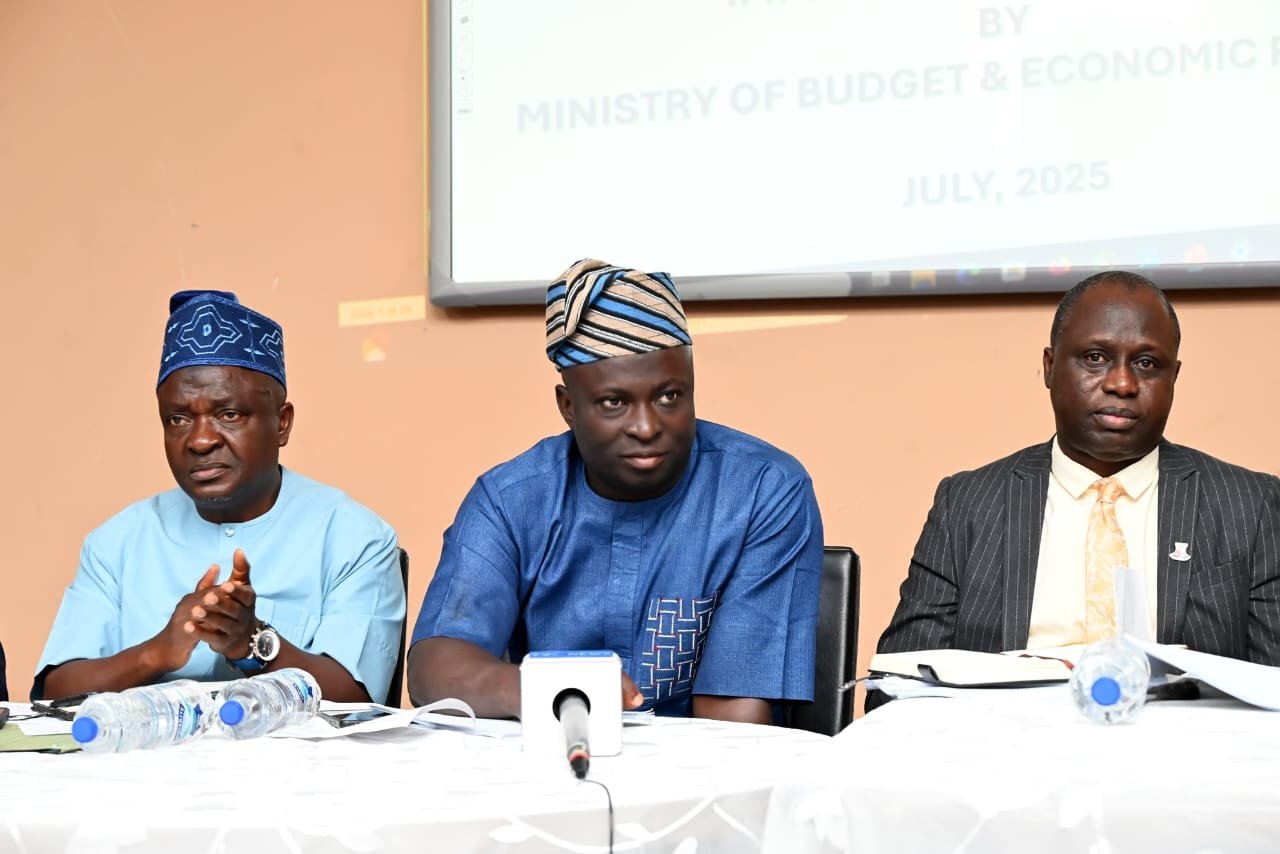
The Oyo State Government has announced that it achieved 80 per cent of its projected revenue in the first half of the 2025 fiscal year. This was disclosed on Wednesday during the presentation of the 2025 Budget implementation report for Quarters 1 and 2 by the Ministry of Budget and Economic Planning.
Presenting the report at the Local Government Staff Training School, Secretariat, Agodi, Ibadan, the Commissioner for Budget and Economic Planning, Professor Musibau Babatunde, said the review reflects Governor Seyi Makinde’s administration’s commitment to transparency and accountability in public finance.
According to him, the government is set to launch another phase of its Sustainable Actions for Economic Recovery (SAfER) programme, with N5.4 billion earmarked to support small and medium enterprises (SMEs), agriculture, transportation, and healthcare.
He said the budget tagged “Budget of Stabilisation” was designed through an inclusive process with inputs from stakeholders across the seven geopolitical zones of the state, adding that citizen-nominated projects were integrated into the final document.
“We have achieved about 80 per cent revenue performance pro rata for the first half of the year, and expenditure stood at 69 per cent. This shows that the outlook for the 2025 budget is promising,” Prof. Babatunde said.
He emphasized that quarterly performance reviews are now institutionalized, following a request by civil society organisations to assess the budget beyond preparation stages.
“These reviews are aimed at providing feedback to stakeholders on government revenue, expenditure, achievements, and challenges. It also gives room to reflect on opportunities created and areas to improve upon.”
On the SAfER initiative, the Commissioner noted that the previous phase of the programme contributed to Oyo recording the lowest food inflation rate in Nigeria as of April 2025. He attributed the success to timely support provided to farmers across various value chains, including livestock, fishery, and crop production.

He said the upcoming SAfER II package would extend support to critical sectors, including transport and health, while also enhancing the business environment.
Responding to questions on rising revenues, Prof. Babatunde explained that while FAAC and Internally Generated Revenue (IGR) had increased, government expenditures had also surged due to factors such as the new N80,000 minimum wage, mass recruitment of teachers, civil servants and healthcare workers, and inflationary pressures.
“You cannot look at revenue without considering expenditure. The government has prioritized improving citizen welfare through strategic spending,” he added.
The Commissioner also highlighted investments in security and infrastructure, especially rural roads under the RAAMP programme, to support agricultural productivity and community access.
He further disclosed that N10 billion has been approved for the first phase of rehabilitation of secondary schools across the state as part of the administration’s commitment to education, one of the four pillars of Governor Makinde’s agenda.
Earlier, in their goodwill messages, the Executive Assistant to the Governor on Finance, Budget and Economic Planning, Alhaji Gafar Bello, and the Permanent Secretary, Ministry of Finance, Dr. (Mrs) Adenike Fashina, emphasized that the review session was designed to assess progress made so far and reposition for improved delivery in the second half of the year.
Other stakeholders, including Prince Oyebade Oyedepo, a former South-West chairman of the Institute of Chartered Accountants of Nigeria, and Mr. Jide Bamgbose of the Justice Development and Peace Commission, lauded the state government’s openness and participatory approach to budget management.
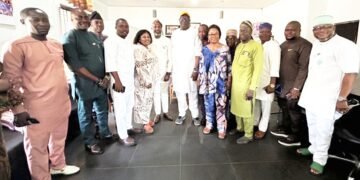
The event was attended by the Special Adviser to the Governor on Budget and Economic Planning, Hon. Simeon Oyeleke; Senior Special Assistant on Economic Planning, Mr. Kehinde Ogunsanya; Accountant-General of the State, Mrs. Kikelomo Adegoke; and stakeholders from across the 33 local government areas of the state.