
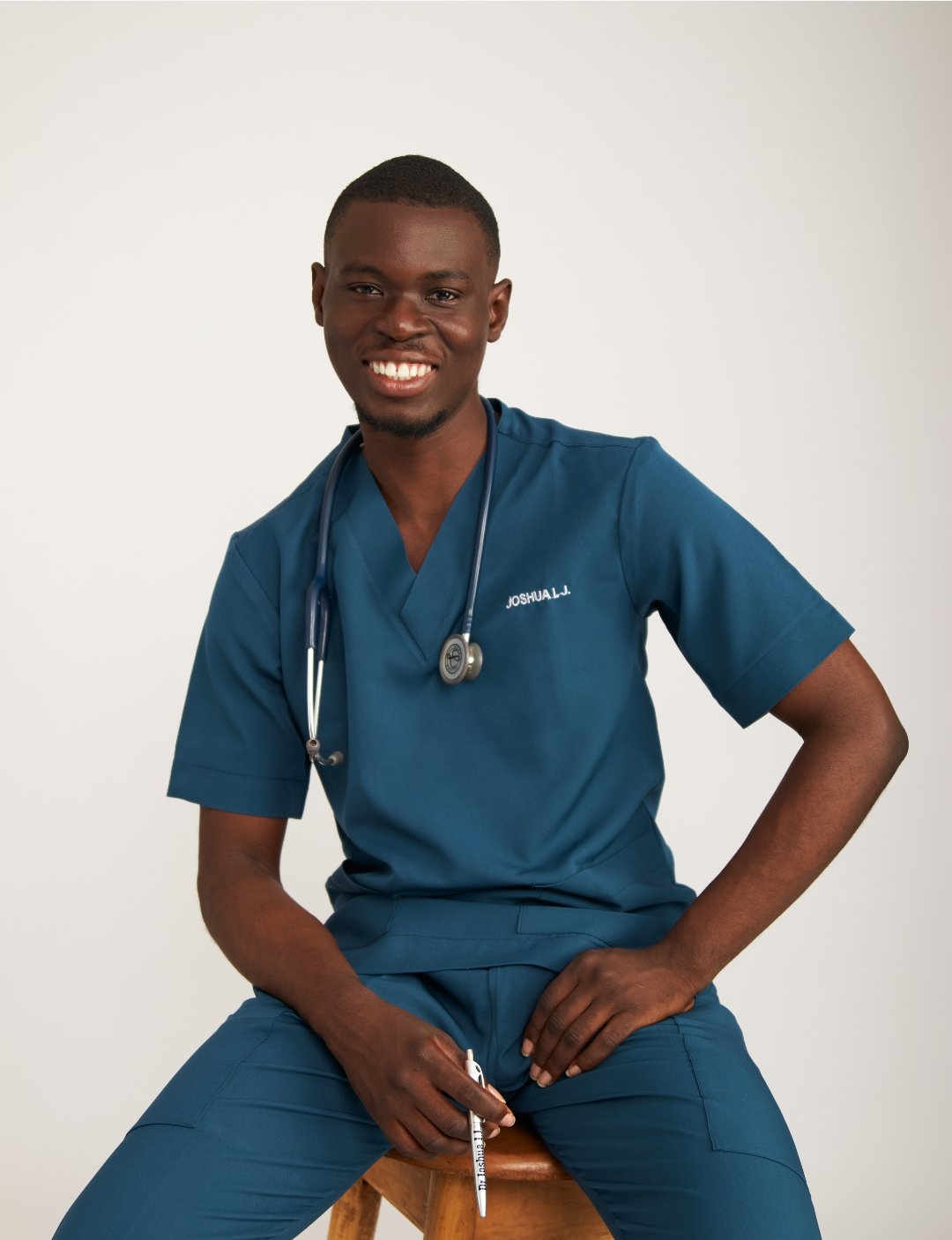
Inioluwa John Joshua, the best graduating medical student of the University of Ibadan’s 2025 class, has emerged as a symbol of discipline, excellence, and resilience. In this interview with Temilade Adeniyi, he shares insights into his academic journey, study habits, personal life, and future ambitions, while reflecting on the challenges within Nigeria’s medical education system..
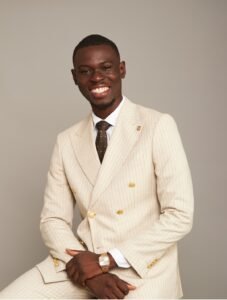
Stories of your achievements are becoming urban legend. First off, how do you feel today?
Thank you very much. I’m doing very well, thank you. It’s a pleasure to be here today. It has been an amazing series of achievements, starting off with going to a university as competitive as the University of Ibadan (UI), then getting admitted to the most competitive programme, medicine and surgery, and eventually graduating as the best medical student.
Do you feel these achievements have changed the way people look at you, and what did your family say when they heard the good news?
I have gotten a lot of compliments, and I got a lot of awards. But I don’t think it necessarily changed how people look at me, in the sense that it’s been a long time coming. It’s been in the works for a very long time, and it’s not my first rodeo. But yes, it’s definitely a very big thing, and a lot of praise and kindness have come from this achievement. My parents were so excited. They were very proud. They were very happy to hear it because they’ve known how long it has taken and how much work has gone into it. And we’re very grateful to God, too.
When you say this is not your first rodeo, what do you mean?
Graduating as the best medical student is a culmination of multiple different things. It’s a long journey, from the second year, up until the final year. I think I had a very good 100 level. Then, I was called “90’s John” by my friends because I had 90s in most of my courses in 100 level. I then had a distinction in anatomy in my first professional exam. Also, I had the highest scores in my second professional exam. So it’s been a buildup of good academic achievements from my first year in school up until now.

So what was your 100-level CGPA, and on what scale?
I think the University of Ibadan switched from its historic 7-point scale to a 4-point system a few years ago, unlike most Nigerian universities, which use 5.0. I had a perfect CGPA. 4.0/4.0.
I would like to know what made you choose medicine and surgery.
Oh, well, to be honest, I think my first love was aeronautical engineering. Initially, when I was very young, I wanted to be a medical doctor, but along the line, my ambitions switched to aerospace engineering. In my final year of high school, I considered possible career opportunities open to me here in Nigeria, and also realised the benefits of being a medical doctor who could help people and transform lives beyond just working with machines. I also prayed to God about deciding what to do, whether medicine or engineering. Eventually, I decided on medicine, and here I am today. I have no regrets at all.
That’s great to hear. However, you mentioned having no regrets for switching to medicine. I am aware that a lot of medical doctors often express frustration for choosing the medical pathway, wishing they had picked other courses. Why don’t you regret leaving engineering behind?
Well, I think coming into medical school, I realized that I actually like medicine. I like the coursework, the complexity, and the challenge. I really enjoy it all. I think it took a long time [to finish], which is something that’s often very discouraging for many people who go to public institutions, but overall, I think it was a great decision, and I’m looking forward to my medical career. So, it’s definitely a decision I’m glad I made. Engineering would have been great, but I think I have enjoyed medicine so much and I’m very happy to be here.
I want you to tell me a bit about your childhood. Can you tell me where you were born and raised?
I was born in Abeokuta, Ogun State, and I lived there for most of my early childhood. I then moved to Badagry, Lagos State, when I was six years old. I initially attended St. Bernadette Nursery and Primary School up to primary one, which is a very fond memory I have of Abeokuta. Then, I completed my primary education at French Village International Staff School (FVISS) in Badagry. Next, I had my secondary school education at French Village International College (FVIC), also in Badagry.
Why French Village?
My parents are teachers. My parents used to teach at FVISS then, so I attended FVISS for primary school. After that, I wasn’t really a big fan of boarding school, so I went to FVIC, which was close to home.
Lagos State University is just about an hour away from Badagry. What made you leave Lagos State to study medicine at Ibadan?
Well, the way I chose Ibadan was very funny. I literally went on Google and typed “best university to study medicine in Nigeria”, and most sites recommended UI. That informed my decision, because I decided that if I was going to study medicine in Nigeria, I had to study at the best university for medicine.
Looking back now, do you still think UI is the best university in Nigeria to study medicine and surgery?
I think UI has some of the best minds. My classmates are amazing people, [and we] have amazing faculty. I think that there are a lot of structural challenges that are now making it less ideal than it used to be. I think that we are really a long way off from where we ought to be. That’s what I would say.
Can you shed more light on these structural challenges?
Okay, for instance, I know you must have heard about the problems with electricity that affected the University College Hospital (UCH), Ibadan. It affected the lives of students and patients. It also affected the quality of training that students had access to because you need electricity for surgical procedures, and for basic things like water, tests, and investigations. These things were not working during the strike, and that was a very big problem. UI is also hemorrhaging staff because lecturers are seeking better pastures, becoming professors, and retiring. We’re not having new lecturers come on board to train the incoming generation of students at UI. Also, it’s a problem, especially when they just admitted 350 students in the current 100-level set. We have more students now but fewer teachers. It’s not looking good at all.
I have been reading about UCH in the dailies, and the problems with power supply, but reading about them from afar is different from experiencing it day-to-day, so I am now better enlightened about the difficulties that came with that.
Moving on, how many years did it take you to get your degree?
I stepped into UI in April 2018 and finished in September 2025. So that’s seven-plus years. Bearing in mind that I gained admission in 2017, that’s eight years altogether.
That’s quite a long amount of time. Did you always aim to graduate at the top of your class, or was this something that happened along the way?
When I got into UI 100 level, I realized that all my classmates were the best graduating students from their various secondary schools. Everybody was excellent. So when I came in, I wanted to find my footing and see how best I could make use of the opportunity I was given to be at UI. I wanted to see if I could be the best also, but I wasn’t really sure that would happen because there were so many talented people. Although 100 level was not really medically inclined, doing well is important because it gives you some confidence that you can also do well when you move forward to preclinical school. I remember during my 100 level holiday, I opened my Keith Moore [anatomy textbook], and I think I saw the chapter on lower limbs, Sartorius muscle, etc., and I was like, “What? How am I supposed to learn all these things?” I just closed the book. Upon getting to preclinical school, although it was initially difficult, I was able to fit in. When I resumed 200 level, I was getting the hang of it, writing notes, and it was sticking, but then I started forgetting where I kept my possessions because I was under a lot of pressure. But then I spoke to somebody who said so far I remembered what I was reading I’d be fine. On my first anatomy test, I initially had a 67% which was heartbreaking because a distinction is 80% at UI. But then it got reviewed, and I then had 74% or 76%, which restored my confidence.
Why did the anatomy department review your set’s continuous assessment scores?
Too many students complained about their scores, wanting to know the breakdown, so they’d know which areas to improve on. An Excel sheet collation error was then discovered and rectified.
Many Nigerian universities don’t give students chances to review their scores.
Yeah, that was a long time ago. I don’t know what applies now, but luckily it happened then, and it was a fortunate event because eventually having a distinction in Anatomy made me believe I could be the best graduating student.
So what would you say your typical day looked like during school?
My typical day varies depending on which posting I am in. I wake up very early in the mornings, maybe around 5 AM, and read up to like 7 AM, then go to class, the lab, the dissection room, or the hospital wards or clinics. Different postings had different closing times, and some were more intense than others, so my routines weren’t really set in stone. I also had to do other extracurricular activities that I was active in.
So you’re basically an “early bird”. Did you ever read into the night?
Yes, I am. However, sometimes when we were preparing for tests, I did read into the night. I remember a funny story from my 200-level days, when my set discovered we would be having continuous assessment tests in anatomy and biochemistry about a month before the tests, and I was lagging behind. I decided to read till daybreak (aka TDB) in the classroom. When I went back to my room to freshen up for lectures, I decided to sleep for just an hour before the 8 AM class. I woke up at 10 AM! I also realised I had read for just four hours that night, so it really wasn’t worth it. That was the last day I ever did TDB in medical school.
That’s hilarious. So, what habits will you say help you succeed?
I think reading regularly, staying on top of schoolwork, and paying attention to detail (which I hold very dear) are very important. Reading to understand and remember for the long-term, and not just to answer questions, helps a lot when you’re writing exams months after being taught. It might be difficult in the short-term to read to understand, but eventually it pays off. I also do a lot of active recall, where I recall what I have read while I’m doing other activities or when I’m less busy. That way, I have a clear understanding of what I can actually remember and what I cannot, so I can go back to the material if need be. I think being deliberate about these study habits helped me succeed in medical school.
The curriculum at UI is quite challenging, and many people struggle, despite the university admitting many intelligent students. Numerous students have voiced their frustrations about the lack of regular breaks, overwhelming stress, and heavy course loads. What do you think has been the most difficult aspect of your experience? Was there any course that was particularly challenging for you?
Having to take in a lot of information was very challenging at times, but overall, I don’t think anything in particular stood out. I, however, did not like paediatrics, particularly because of the negative marking and signing of posting booklets. So it was, it was my least favourite course. In addition, I found it difficult to combine school with organising the logistics for my breast cancer awareness initiative called “Project Better Life,” which I organised around the time of my first paediatric posting, with my classmates Sophia Okeke and Yeshua Adedeji, because paediatrics was extremely challenging.
Did any mentors, lecturers, or friends help you achieve success?
I had great seniors. I looked up to people who had done very well, reached out and discussed with them. They would give me tips on how to prepare for exams, avoid mistakes, and solve problems. Despite this support, success still has to come from within. In addition, Drs. Shakirat Gold-Olufadi and David Babalola were huge inspirations and my support system in school. Moreover, apart from direct mentorship, I think watching people do excellent things was also a support for me. I was in the Royal Quiz Club, where I interacted with very exceptional people. I also got to interact with Drs. Efosa Iyawe and Kelechukwu Ughagwu, who were past BGS. I also heard about Drs. Segun Afolaranmi and Edward Olufunmilayo. Being in the Royal Quiz Club was a very big factor, as I got to see people who were exceptional and excellent. It was a very big motivation for me because you have to learn new things and be outstanding to be in that community. Eventually, many of the things that you learn as a quiz club member would be helpful for you in medical school and make you stand out.
How did you find time to combine all these extracurricular activities, such as the Royal Quiz Club and your Project Better Life cancer outreach? I would also like to know about any other extracurricular activities you were involved in.
To do many activities, what I did was prioritise at every given time. Schoolwork was my number-one priority most of the time, and then other things would come up. I made sure I was very consistent with my school work, so I could flexibly prioritise other things as they came up. For the University of Ibadan Medical Students Association (UIMSA), I started in 200 level as a class congressman, and I then became a senator and also the assistant class representative in 300 level, then senate chief whip in 400 level and senate chairman in 500 level, and finally president in 600 level, where I worked with a very amazing team of people, and thus was able to delegate responsibilities to them. I also served as the health minister of Nnamdi Azikiwe Hall in 300 level, before crossing over to clinical school, where I eventually became the president of the faculty of clinical sciences. I was a member of Enactus for two years and of Junior Chambers International Nigeria, UCH chapter, where I served as Director of Strategic Partnerships and Individual Opportunities. I was also the general secretary and president of the Royal Quiz Club in 500 and 600 level, respectively. In addition, I was a member of the Asido Campus Network, UI, where I helped start a program called the Preclinical Summit, which offers guidance to medical students on balancing schoolwork with their mental health and runs annually till date. I also wrote competitive essays and won over 10 national and international essay competitions. I participated actively in research, serving as a member of the College Research and Innovation Hub, publishing five papers as a medical student, and presenting two papers at conferences. I was also a Fellow of the Bridge Program Fellowship in 2024, a member of The Red Cross and The Liquid Network, and I played competitive Scrabble, representing my school and my class. I think I had a very rich experience as a medical student.
Well, I think I was just willing to make the best of the opportunity to be at UI. I also realised that, to be exceptional and world-class after medical school, you cannot make medicine the only thing you do with your life, or make being a medical student your entire personality. Also, when I began doing all these things, I realised I was actually good at them. So, I just tried my hand at different things, and they worked out well.
Running many of these programs can be quite time-consuming, energy-intensive, and resource-intensive. How did you manage financially during school?
I had a very good support system from my parents. I was also a recipient of two national merit scholarships, from the Federal Scholarship Board and the Agbami Medical and Engineering Professional Scholarship, which helped me while in medical school.
While preparing for this interview, I discovered you’re quite the lover boy. Can you tell me the role your partner played in becoming the best graduating student?
I disagree with whoever said love and academic excellence cannot mix. Yes, I have an amazing partner. Her name is Adedolapo, we’ve been dating for a few years now, and she is a very big part of my support system. It was very good to have someone who understood the rigors of medical school in my corner. So, yes, she was a very big part of my success story.
During exam periods when I had to take some time away from our relationship, she was very understanding, and she had her own exams; I would do the same. I’m grateful to God for having such an amazing partner, who is a big part of my success story.
What advice would you give to any reader going through this who is a student and wants to excel academically and in extracurricular activities?
I think the first thing is you need to know where you’re going and what you need to do to get there, so you will not be coasting [through life]. For instance, to be BGS, I didn’t wake up in 500 level and aim for that. I realised early that I had to be in the top five in all my courses. Next, you must be ready to put in the work, as it is a lot of hard work. Hard work will beat talent if talent does not work hard. My mantra is “whatever is worth doing is worth doing well.” Furthermore, I think it’s very important to have a good community of friends and family who are supportive of your dreams, because at some point, you might lose your way or need answers to questions you cannot provide yourself. You should also be humble enough and ready to accept your faults when we’ve not done well enough and identify where you might need to recalibrate, because a lot of times, when we are in pursuit of a goal, and things are not working well, we are very quick to assume that external factors are responsible. Finally, I think God’s help is also the most important.
So I want to ask what your future plans are and what you are currently doing.
I am considering a number of things. I’d like to pursue a master’s degree in epidemiology and public health, so I’m looking towards that now. But I think I’ll be starting my house job first, hopefully by next month. So after house job, maybe a master’s, and eventually residency in either emergency medicine or general surgery.
It has been a pleasure conducting this interview. I wish you the best in your future endeavors.
Amen! Thank you very much. I really appreciate you taking the time to do this.