

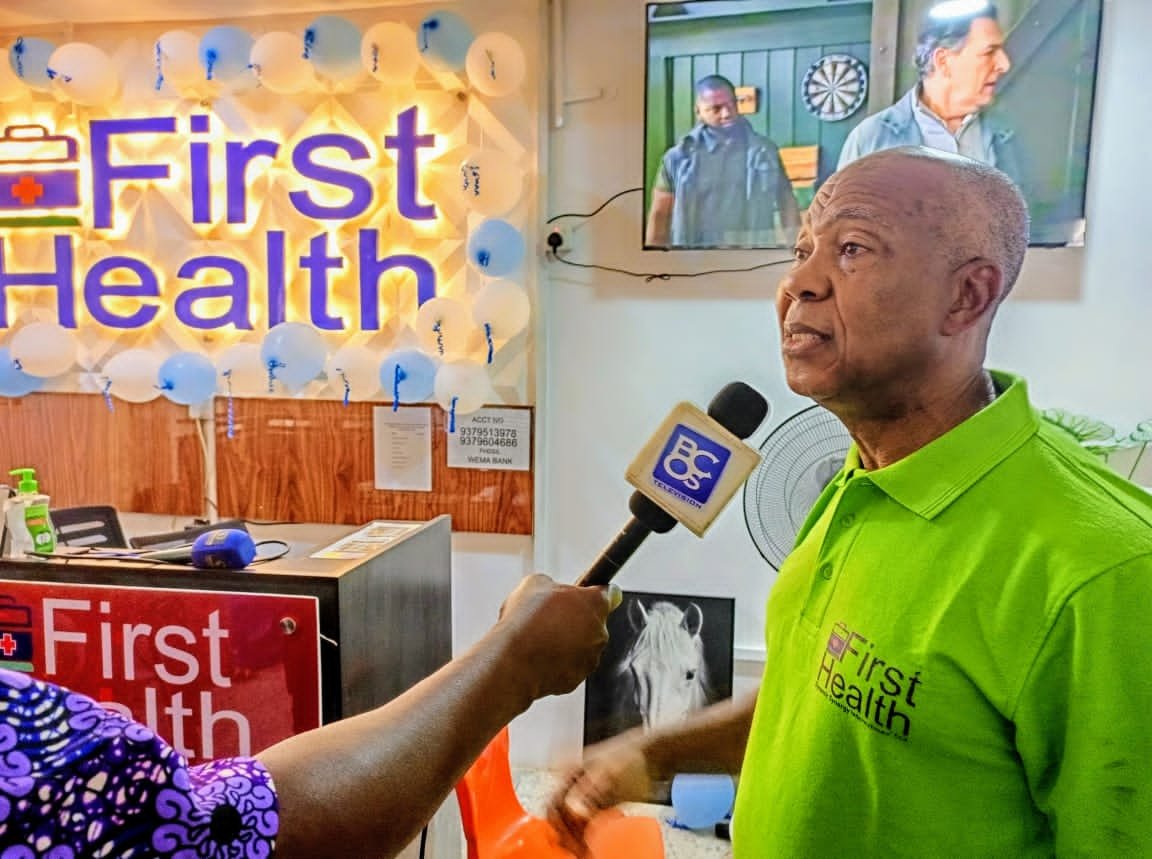
The first Centre for Osteoporosis and Bone Health in Oyo State has been unveiled in Ibadan, with health experts calling for increased awareness, early prevention and stronger collaboration between government and private health providers to tackle the rising burden of osteoporosis in Nigeria.
The Chief Executive Officer of the Centre, Professor Temitope Alonge while speaking with journalists at the unveiling of the centre said the facility was established to promote education, early diagnosis and individualized treatment of bone-related conditions, particularly among the elderly.
He noted that bone health remains poorly understood despite bones being among the most vital organs in the human body.
“People often think bone is just the skeleton that gives structure, but it is a very important organ and the biggest store of key minerals in the body, especially calcium,” he said.
Prof. Alonge explained that bone formation and breakdown occur continuously through a process known as remodeling, involving bone-forming cells (osteoblasts) and bone-resorbing cells (osteoclasts). According to him, a delicate hormonal balance determines how much bone is formed and removed at any given time.
He stated that women typically have stronger bones during their reproductive years due to the protective effect of estrogen, but experience accelerated bone loss after menopause when estrogen levels decline.
Citing findings from a study conducted at the University College Hospital Ibadan, he said osteoporosis was rarely recorded before the age of 40 but increased significantly from middle age.
“We studied about 2,040 patients and found that before age 40, none had osteoporosis. Between 45 and 50, we began to see osteopenia, and by 60, full-blown osteoporosis became more common,” he said.
He described osteoporosis as a condition in which bone mineral density reduces to the extent that minor falls can result in fragility fractures, often affecting the wrist, hip and spine. He added that gradual spinal collapse could cause height loss and a hunched posture in older people.

Prof. Alonge stressed the importance of exercise, good nutrition and healthy lifestyle habits in building adequate bone stock before old age, warning that Nigeria may face a growing osteoporosis burden as life expectancy improves.
“In the past, life expectancy was low, so osteoporosis was not seen as a major public health issue. Now people are living longer, and the risk of fragility fractures is much higher,” he said.
He referenced global data indicating that countries such as the United States and the United Kingdom spend billions of dollars annually managing osteoporosis-related complications, emphasizing that prevention remains more cost-effective than treatment.
The CEO added that treatment options vary depending on severity and affordability, including oral medications, injections and intravenous therapies. He stressed that calcium supplementation must be properly combined with vitamin D3 and vitamin K2 to ensure effective absorption and prevent complications such as kidney stones.
On access and affordability, Prof. Alonge called for deeper synergy between government and private sector operators, as well as expanded health insurance coverage.
“Health is both a business and a social service. Government alone cannot solve Nigeria’s health challenges without integrating the private sector,” he said.
He also advocated making bone density screening routine for older Nigerians, noting that in many developed countries, annual DEXA scans are recommended for people above 60 or 65 years.
Earlier, the Oyo State Commissioner for Health, Dr. Oluwaserimi Ajetunmobi, described the centre as a significant step toward improving the quality of life for elderly residents.
She said the facility is equipped to assess bone mineral density and determine levels of bone loss, enabling appropriate medical and lifestyle interventions.
“As we grow older, our bones become softer and more prone to fractures. This centre will provide the right assessment, counselling and support to help older people age gracefully,” she said.
Dr. Ajetunmobi confirmed that the Oyo State Government is exploring areas of collaboration with the centre to improve access for elderly residents.
Other health stakeholders at the event emphasized that sustained investment in bone health, preventive care and insurance-backed services would be crucial as Nigeria’s population continues to age.