

The Yoruba people are globally celebrated for the Omoluabi ethos—a value system built on integrity, courtesy, respect and good character. Central to this philosophy is the belief that manners define a person more than titles or material possessions. Among the Yoruba, anyone who fails to show courtesy or respect is quickly dismissed as alainitiju (shameless) or, more pointedly, “ko ni eko”—one who lacks home training.
From time immemorial, Yoruba culture has been clear on issues of respect across age and status. It is considered improper for a younger person to wait for an elder’s greeting, or to extend a handshake to an elder without first showing deference—often by standing, bowing, or prostrating, depending on gender and context. These practices are not mere rituals; they are symbols of humility and social order.

Sadly, these long-held values appear to be eroding. More troubling is the perception that some of today’s royal fathers—who ought to be custodians and exemplars of culture and tradition—are failing to uphold and promote these ideals. Beyond crowns, titles and the paraphernalia of office, the traditional institution is expected to lead by example, especially in public conduct.
The late Alaafin of Oyo, Oba Lamidi Olayiwola Atanda Adeyemi III, remains a reference point in this regard. Though known to be firm and, at times, visibly expressive of displeasure, his reactions rarely brought public embarrassment to his people or diminished the dignity of the throne. He understood that royalty is as much about restraint as it is about authority.
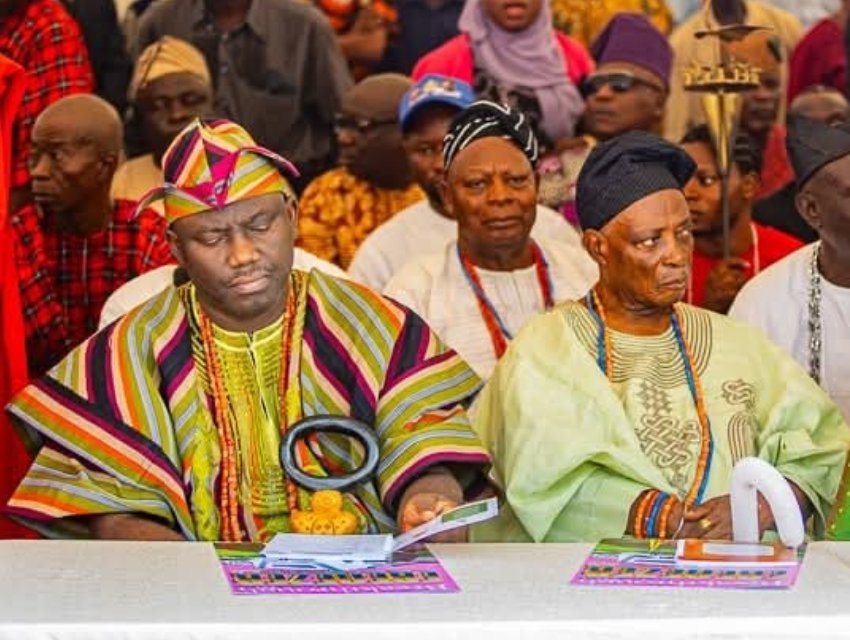
Against this backdrop, the recent incident involving the Alaafin of Oyo, Oba Abimbola Akeem Owoade, and the Olubadan of Ibadanland, Oba Rashidi Adewolu Ladoja at Oyo state government annual thanksgiving has generated widespread concern. What ought to have been a routine interaction between revered traditional rulers has been interpreted by many as an unnecessary display of arrogance and a deviation from cultural expectations.
While the historical significance and prestige of the Alaafin’s stool in Yoruba history cannot be disputed, age remains a sacred consideration in Yoruba culture. The present Olubadan of Ibadanland Oba Rashidi Adewolu Ladoja Arusa1, by age is far older than Alaafin Owoade By tradition, it would have been culturally appropriate for the younger monarch to rise and show visible respect before extending a handshake—regardless of titles or perceived hierarchy.
The worry is not merely about one incident, but about the broader implications. The Alaafin appears to be engaging in battles that offer little value and are largely avoidable—battles that risk eroding goodwill, affection and the revered image of the throne. These are matters that wisdom suggests should be overlooked in the interest of unity and cultural harmony.
Today, Yorubaland faces far more pressing challenges. External threats, insecurity, land encroachment and the killing of innocent people have made many natives feel like strangers in their ancestral homes. At such a critical time, the people look up to their traditional rulers for leadership, unity and moral authority—not rivalry and supremacy contests.

Indeed, rivalry among traditional institutions has always existed, but never should it overshadow the collective survival and dignity of the Yoruba people. When custodians of culture appear divided or driven by ego, the social fabric weakens.
Royalty, in its truest sense, must be anchored in humility, courtesy and responsibility. Without these, crowns lose their meaning, and traditions lose their soul. Yorubaland deserves traditional rulers who will rise above personal pride to protect a heritage built on respect, harmony and the enduring values of the Omoluabi.