
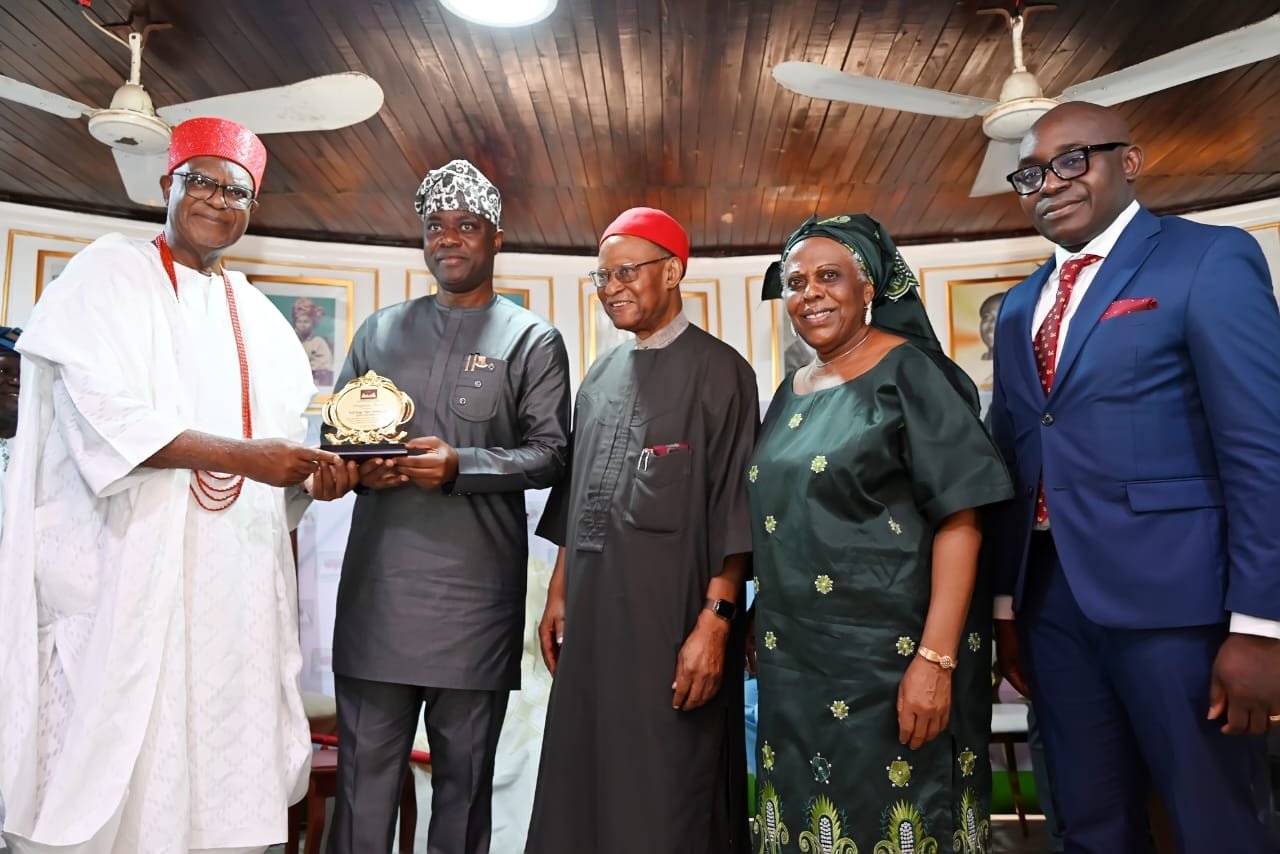
Makinde Calls for Elite Consensus to Make Federalism Work in Nigeria
Governor Seyi Makinde of Oyo State has said Nigeria’s federal system can only function effectively if political leaders and stakeholders reach an elite consensus focused on long-term national development.
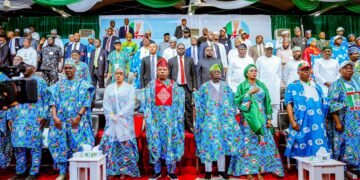
Makinde made this assertion on Friday while delivering remarks at the **2026 Obafemi Awolowo Memorial Lecture 2026, held at Efunyela Hall, the residence of the late sage in Ikenne, Ikenne, Ogun State.
The governor said Nigeria must return to the ideals of the country’s founding fathers, particularly the first Premier of the Western Region, Obafemi Awolowo, whose governance style was rooted in data, logic and scientific thinking.
Makinde noted that contemporary leadership in the country had drifted away from such principles.
“Papa Awolowo, before tackling any challenge, would look at the data, the logic behind those things and the science. Those were the tools he used to take decisions. But today, leadership sometimes takes decisions simply because we think we are playing politics or because it feels nice to have,” he said.
According to the governor, his administration in Oyo State has been guided by the same core principles championed by Awolowo, particularly in the areas of education, healthcare and economic empowerment.
“If you look at the cardinal programmes of Papa Awolowo — education, health and economic emancipation — and you add security to them, that is exactly what we are doing in Oyo State,” Makinde stated.
The governor stressed that Nigeria’s diversity makes federalism the most suitable system of governance, but warned that it would only deliver results if political leaders agree on a shared vision for the country’s future.
He explained that such an agreement, often described as an “elite consensus,” involves political leaders and the ruling class aligning on long-term national goals and policy direction rather than focusing on short-term political gains.
Makinde urged leaders to prioritise future generations over immediate electoral calculations.
“We should stop thinking about the next election. Let us think about the next generation,” he said.
Drawing lessons from other African countries, the governor cited the protracted conflict in the Democratic Republic of the Congo following the assassination of its first prime minister, Patrice Lumumba, noting that instability had persisted in the country’s eastern region for decades.
He also pointed to the remarkable recovery of Rwanda after the Rwandan Genocide of 1994, where nearly one million people were killed, saying the country’s leadership took deliberate steps to rebuild and transform its economy.
“If we don’t do something about our situation in Nigeria, 100 years from now we may still be facing the same challenges,” Makinde warned.
The event attracted several prominent dignitaries, including former governors Gbenga Daniel and Olagunsoye Oyinlola, Minister of State for Health Isiaq Salako, and Ogun State Deputy Governor Noimot Salako-Oyedele.
Others in attendance were former Commonwealth Secretary-General Emeka Anyaoku, who chaired the occasion, the Obi of Onitsha Nnaemeka Achebe, and politician Ladi Adebutu, among other notable personalities.