
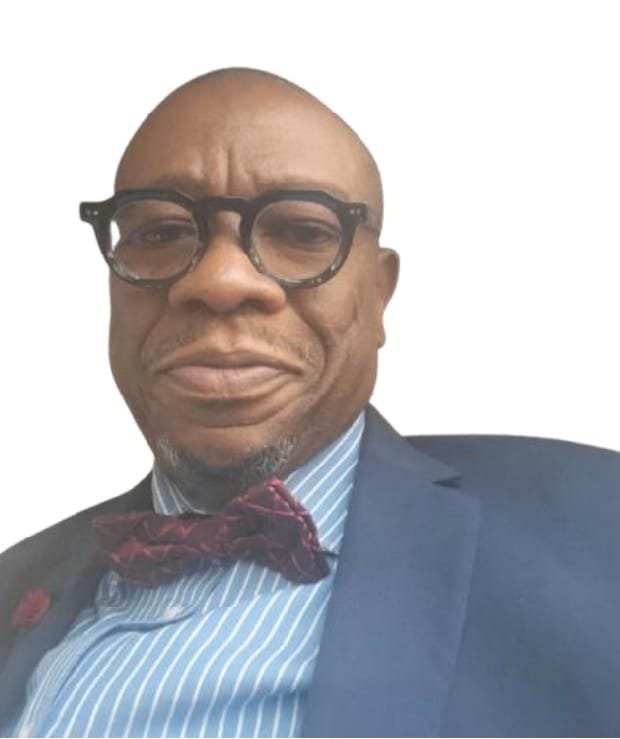
Chief Bolaji Ayorinde SAN OFR is not only a legal icon but also a respected politician and chieftain of the Peoples Democratic Party (PDP) in Oyo State.

In this interview, Ayorinde, among other issues, spoke about the positive impacts his roles as Chairman of the Governor’s Advisory Council and Special Counsel to Governor Seyi Makinde have had on the current administration in the state.
He analyzed how the Makinde-led administration has fared in the last six years and its effects on the people of the state.
Ayorinde also emphasized the critical need for a dynamic leader in Oyo State to ensure the continuity and acceleration of its ongoing development.
He stressed that the next leader must possess the acumen to build upon existing achievements, address emerging challenges, and foster an environment where development is not only maintained but also significantly advanced across all sectors for the benefit of the state’s populace. Excerpts…
Looking back at the past six years, what do you consider the most significant policy achievement of the Governor Makinde-led administration, and how has it directly impacted the lives of average citizens in Oyo State?
I think this government started with a people-first policy. It was very quick to identify and correct the terrible situation where civil servants were owed salaries for months, and right from day one, the Governor ensured that salaries were paid promptly before the end of the month.

This was achieved through very significant financial engineering by the administration, which also had a positive effect on the state’s economy. It boosted commerce because civil servants were able to spend more in the domestic markets.
Secondly, the government embarked on opening up the state through major road infrastructure. Areas that were previously unreachable in the hinterland, particularly the agricultural belt, became accessible.
This made the transportation of produce easy and market-friendly. Furthermore, the infrastructure in the urban areas, that is, the big cities, was greatly improved upon.
Transportation became easier because of good roads. Decent and standard bus terminals were constructed, and all these have greatly impacted the socioeconomic development of the state.
Conversely, what has been the greatest challenge or unexpected hurdle the administration has faced, and how was it addressed?
Initially, the change in administration and focus on development were a bit strange to the people. This was not their fault; they were used to government existing for the sake of being government.
So, a new governor came in, youthful, with outstanding capacity to work, rolled up his sleeves, and changed the narrative of government work and services. It took some time for the people to get used to the dynamism of the Seyi Makinde administration.
It is satisfying now that the good people of Oyo State have become used to a style of government that delivers.
Beyond statistics, how would you describe the mood and sentiment of the people of Oyo State regarding the current administration’s performance, and what factors contribute to this perception?
Even though no government can be 100% in service delivery, the people of Oyo State have seen the industry and capacity of this government, and they will surely not want a setback. Instead, they will be eager to support a candidate who will improve on the foundation already laid for further development.
Given your unique advisory role, what specific advice have you provided to the Governor that you believe has been instrumental in shaping key decisions or policies of this administration?
As Chairman of the Governor’s Advisory Council, my members and I advise the government on many issues affecting the state.
Sometimes on issues referred to us by the Governor, and sometimes on issues referred to us by the people.
This function is different from the State Executive Council, which is an operational arm of the government. Our own is strictly advisory.
Apart from being Special Counsel to the Governor, I was a member of the Advisory Council between 2019 and 2023. Thereafter, I became Chairman of the Council. I’m glad to say that the Governor has always taken our advice seriously.
As we approach 2027, what critical qualities and leadership attributes should the people of Oyo State prioritize when evaluating potential leaders to ensure continued progress and stability?
Oyo State cannot at this critical time afford to take backward steps in governance. We have extremely qualified individuals who will be accepted by the political class and the people of the state, and who are accomplished technocrats.
Such a person will be in a strong position to lead the state going forward. This is not the time to do ‘Emilokan’ politics. It is not the time to do ‘Amala’ politics; this is the time for serious work, consolidation, and development.
We need a leader who has been tested with leadership responsibilities and has performed. We cannot experiment with those who have been unable to deliver with previous assignments.
We cannot risk persons who want to lead just for the glamor of the office.
Considering the future development of Oyo State, what one transformative vision do you believe the next administration should champion to truly elevate the state’s economic and social landscape?
My vision for Oyo State is to have the state reach its full potential of economic sustainability, where we do not need to rely on federal allocation to sustain our economy. You can see we now have the advantage of an international airport powered by the state government. We have the rail terminal; we have the roads and transportation system.
Furthermore, a city like Ibadan has become very attractive to people living in Nigeria and overseas. We should also mention that the free trade zone, which has come on board, has now become a hub for new industries, boosting employment for the people and revenue for the state. The outlook is very good.